1 August 2020, was the 201st anniversary of the birth of Herman Melville. 2019 was my year to be totally immersed in Moby-Dick (for the third time), an awesome masterpiece. This is PERHAPS, the greatest novel yet written in the English language.
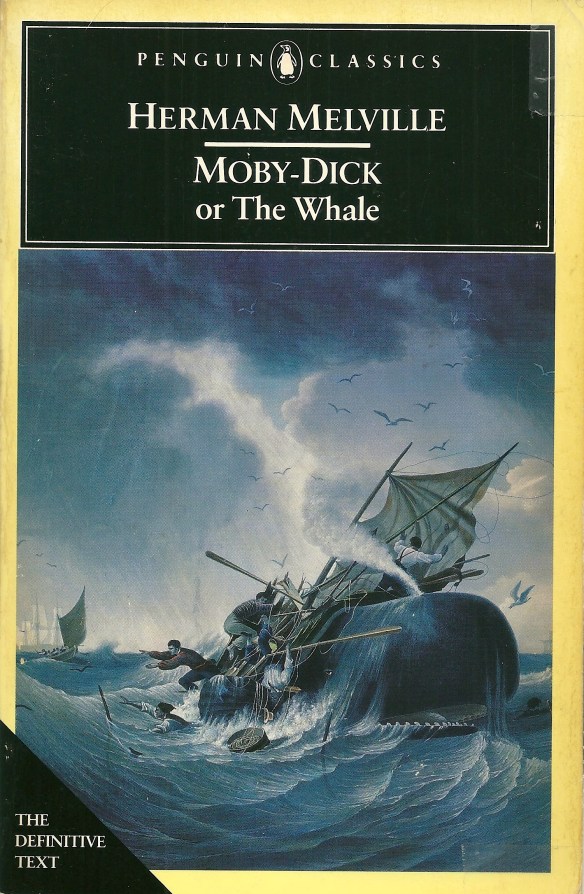
I’ve written previously on Melville and Moby-Dick here:
Happy 200th, Herman!
https://manuelgarciajr.com/2019/08/01/happy-200th-herman/
Moby-Dick
https://manuelgarciajr.com/2019/08/07/moby-dick/
Ye Cannot Swerve Me: Moby-Dick and Climate Change
https://manuelgarciajr.com/2019/07/15/ye-cannot-swerve-me-moby-dick-and-climate-change/
The Ultimate Great American Novel
https://manuelgarciajr.com/2018/09/04/the-ultimate-great-american-novel/
<><><><><><><>
W. Somerset Maugham’s “Ten Novels And Their Authors”
Maugham wrote a book of this title, describing his picks, ranked as shown below, His essays on each are excellent.
War and Peace (Tolstoy)
Madame Bovary (Gustave Flaubert)
Pride and Prejudice (Jane Austen)
The Brothers Karamazov (Dostoevsky)
Le Père Goriot (Honoré de Balzac)
Wuthering Heights (Emily Brontë)
Le Rouge et le Noir (The Red and The Black; Stendhal)
Tom Jones (Henry Fielding)
David Copperfield (Charles Dickens)
Moby-Dick (Herman Melville)
Read by MG,Jr (from Maugham’s list), so far:
Madame Bovary (Gustave Flaubert)
The Brothers Karamazov (Dostoevsky)
Le Père Goriot (Honoré de Balzac)
David Copperfield (Charles Dickens)
Moby-Dick (Herman Melville)
I like the following, as SOME of the other novels that I think are “classics”:
The Three Musketeers (Alexandre Dumas)
Huckleberry Finn (Mark Twain)
On The Road (Jack Kerouac)
Slaughterhouse Five (Kurt Vonnegut)
The Three Musketeers is described here:
My Favorite Classics
https://manuelgarciajr.com/2017/09/18/my-favorite-classics/
Huckleberry Finn and Slaughterhouse Five are described here:
The Ultimate Great American Novel
https://manuelgarciajr.com/2018/09/04/the-ultimate-great-american-novel/
<><><><><><><>
Three movies from 2015-2016:
Heal the Living (Réparer les vivants) (2016)
Superb film by Katell Quillévéré (screen-writer and director), about life, death and organ donors. The meditative nature of this film, without excessive pathos, with a lovely piano accompaniment (most of the time except for two noisy rock songs), the lovely crisp photography possible with today’s equipment, and its seamless transitions between wakeful reality and introspective day-dreaming, and back, and its transitioning ensemble – constellation – of collaborative actors (instead of a star in front of background “support”), make this a very thoughtful and artistic film that presents fundamental truths. All these sterling qualities (except for the crisp photography) will make this film largely unpopular for US audiences, especially when spoken in French with English subtitles.
https://youtu.be/otYWveDaplo
Genius (2016)
A superb English film about legendary American authors, particularly Thomas Wolfe (author of “Look Homeward, Angel”) and really about Max Perkins, the Scribner’s (book publishing company) editor who discovered Ernest Hemingway, F. Scott Fitzgerald and, most flamboyantly, Thomas Wolfe (the movie is ostensibly about him). The heart of the story is about friendship (male friendship) collaborating in the creative artistic process, in this case to produce literary novels. Anyone who likes reading (actual books of literature, in paper), and who strives to produce excellent art that requires collaborators (particularly theater and often music, and inevitably every art) in any medium would like this movie. However, the American reviewers were not keen on this movie because they and most American audiences don’t really like reading and find the movie “slow;” it’s basically a detailed exposition of intellectual processes (and what American wants to watch that?); its lighting is “dark” (which is how it actually looks in downtown Manhattan); Americans don’t like foreigners making movies about American subjects (English actors can do any variety of American accents, but American actors can’t do English, or any other foreign accent); and the movie unrolls like a well thought-out play since it was in fact directed by an English theatrical director (with a story based on a carefully studied biography of Max Perkins).
https://youtu.be/gCvcD3IBSlc
Mr. Holmes (2015)
This is a modern and very clever modern story (i.e., not by Arthur Conan Doyle) of Sherlock Holmes near the end of his life in retirement, living as a beekeeper. The plot, photography, score, and acting by the (largely) English cast are all first rate, naturally. The film has proved popular with English and American audiences, and rightfully so. The story involves Holmes as a 93-year-old (in ~1947) who, despite failing memory, is trying to recall the details of his last case, which ended tragically and caused him to retire. The jumps between “the present” (~1947) and flashbacks (~1912) are clear, as are the transitions to the flashbacks to Holmes’s post WWII visit to Japan (1946/1947). There is enough of the “solve the mystery” element in the film to satisfy most Sherlock Holmes fans, and a thoughtful emotional-psychological thread to the story that was not ruined by an excess of pathos or icky sweetness. Of course the acting, photography and score were good and well-integrated into this polished work of cinema. Overall, nicely paced and good entertainment with wit, polish and good heart.
https://youtu.be/0G1lIBgk4PA
<><><><><><><>
Some commentary on Anti-War movies and books:
The Pentagon Papers in the Movies
[the 2003 movie is the best, and what a story!]
20 April 2018
https://manuelgarciajr.com/2018/04/20/the-pentagon-papers-in-the-movies/
Anti-War and Socialist Psychology Books and Movies
23 January 2018
https://manuelgarciajr.com/2018/01/23/anti-war-and-socialist-psychology-books-and-movies/
<><><><><><><>
Lafcadio Hearn
Lafcadio Hearn (1850-1904) was an unusual American who eventually became a Far Eastern foreign correspondent to American newspapers and magazines, and an expert interpreter of Japanese and Chinese stories, legends and fables, as well as a keen observer of how life was conceptualized and conducted in Asia (mainly Japan).
Lafcadio Hearn was born in Lefkada, a Greek island in the Ionian Sea on the west coast of Greece. He had an Irish father and Greek mother, and a difficult childhood filled with rejection. He also lived a very unusual life, for some time a newspaper crime reporter in the U.S.A. (Cincinnati, New Orleans), marriage to a Black Women at a time when mixed marriages were extremely difficult to sustain socially in the U.S., and then moving on to a foreign correspondent role, first in the French West Indies and then in Japan. There, he learned Japanese, taught in Japanese schools, married a Japanese woman and had four sons, and lived out a happy last chapter to his colorful and literary life.
A superb book by Hearn is Kwaidan, which is a book of Japanese ghost stories, and which book was the basis of an amazing 1965 Japanese art film (movie) of the same title by Kobayashi. I think Kwaidan is a masterpiece.
Gleanings In Buddha Fields is a collection of stories (the mythical, legendary and fabulous) and essays (on the realities of life), which in total immerse the reader into the zeitgeist, or context, of late 19th and early 20th century Japan.
Alan Watts noted that Lafcadio Hearn’s book Gleanings In Buddha Fields (1897) sparked (or was one of the sparkers of) his interest in Buddhism and Eastern Philosophy. I read Gleanings In Buddha Fields because I was curious to learn the source (about one of the sources) of where Alan got his Zen.
I recommend Gleanings in Buddha Fields to you (and Kwaidan).
Because some (at least one or two) of Hearn’s references to historical personalities of 19th century (and earlier) Japan are not part of modern memory, you might have to do a little Internet researching to gather some of the historical facts about the incidents Hearn was referring to (in Gleanings…), in order to fully appreciate Hearn’s presentation. But even without such deeper investigation, Gleanings In Buddha Fields is an excellent, informative, thoughtful and Zen-atmospheric book. In discovering it with your first reading, you can also imagine yourself reliving, at least in part, the juvenile awakening to Zen Buddhism experienced by Alan Watts (whose The Way of Zen is a masterpiece).
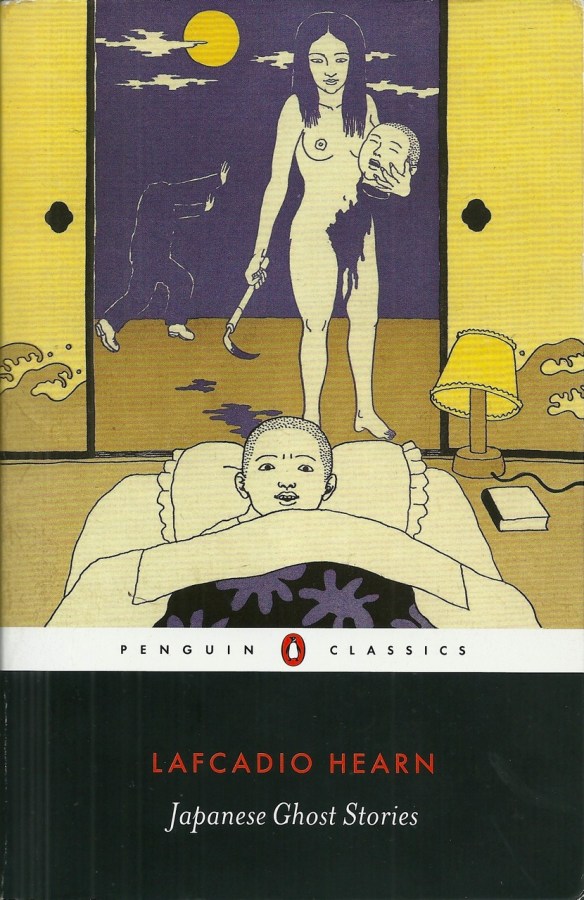
A modern collection of selected Japanese stories (including some from Kwaidan) by Hearn is the following. It is excellent, and well-researched, with a very informative introductory essay by the editor-researcher, who was Ireland’s ambassador to Japan.
<><><><><><><>
Cinema Art From 1968 For Today
18 August 2018
https://manuelgarciajr.com/2018/08/18/cinema-art-from-1968-for-today/
<><><><><><><>
The Ultimate Great American Novel
4 September 2018
https://manuelgarciajr.com/2018/09/04/the-ultimate-great-american-novel/
<><><><><><><>
All Quiet On The Western Front
“All Quiet On The Western Front,” by Erich Maria Remarque (22 June 1898 – 25 September 1970), is the greatest war novel of all time. Why? Because it vividly conveys the physical, psychological and emotional realities of being at the front face-to-face with the enemy in an all-out massively industrialized war. “All Quiet On The Western Front” is also the greatest anti-war novel of all time. Why? Because it vividly conveys the physical, psychological and emotional realities of being at the front face-to-face with the enemy in an all-out massively industrialized war.
This novel was first published 92 years ago, in 1928; and its story is set a century ago, in 1918, during World War I. This novel describes the realities of a soldier’s transformation from naïve enthusiastic recruit to hardened emotionally vacant veteran, the deadly and depersonalizing confusion of military operations, the rush and terror of frontline combat, the haphazard allocation of injuries, the slow-motion dread of being in hospital, the brief joys and overwhelming alienation and anguish of home leave, the struggle against insanity, the scant and fleeting serendipitous joys in the field, the loss of a personal past that moored one to a potentially fulfilling future in one’s culture, and the crushing of the lonely human spirit shadowed by the omnipresence of death. The human reality of this novel is timeless. Most of us casually say we are anti-war, but to truly inoculate yourself against any taste for war you must read this book and allow its story, and its feeling, to soak deep into your psyche.

<><><><><><><>
F. Scott Fitzgerald
Fitzgerald’s novel Tender Is The Night hit me like a thunderbolt. Fitzgerald drew the title from a line in John Keats’s poem “Ode to a Nightingale.” I’ve written quite a bit about Fitzgerald (follow the links to that). Below are a few of the comments about Fitzgerald and movies about him and his novels.
Appreciating F. Scott Fitzgerald
https://manuelgarciajr.com/2019/04/24/appreciating-f-scott-fitzgerald/
The Poetry of Disillusionment in “Gatsby” is Beyond the Movies
https://manuelgarciajr.com/2020/04/27/the-poetry-of-disillusionment-in-gatsby-is-beyond-the-movies/
F. Scott Fitzgerald and Lost American Lyricism
https://manuelgarciajr.com/2019/06/17/f-scott-fitzgerald-and-lost-american-lyricism/
I Learn About F. Scott Fitzgerald
https://manuelgarciajr.com/2019/03/16/i-learn-about-f-scott-fitzgerald/
Two “F. Scott Fitzgerald” movies:
Last Call is based on the memoirs of Frances Kroll Ring (1916-2015), Fitzgerald’s last secretary, and sounding board, to whom he dictated his last novel The Love Of The Last Tycoon, A Western. Frances Kroll Ring’s book (1985), highly praised by both scholars and Fitzgerald aficionados for its accuracy, detail and sympathy, is about the last two years (1939-1940) of Fitzgerald’s life. Frances Kroll Ring (herself in 2002) appears at the end of the film. A very well made film, as close as we’ll ever get to “being there” with Scott. Jeremy Irons plays Scott, Neve Campbell plays Frances Kroll Ring, both excellently in my opinion. The Cambridge Companion To F. Scott Fitzgerald (2002) is dedicated to Frances Kroll Ring “with affection, gratitude, and respect from everyone who reveres F. Scott Fitzgerald as man and artist.”
Getting Straight is a fun movie of college life and protest in 1970, and centers on a much put upon ex-activist and graduate student of literature (“Harry,” played by Elliot Gould) who ultimately gives it all up (except the girl) in a very spirited defense of the art and spirit of F. Scott Fitzgerald. This movie was approvingly pointed out by Ruth Prigozy, the editor of The Cambridge Companion To F. Scott Fitzgerald. I was surprised at how many references Harry makes to characters and incidents in both Fitzgerald’s novels and in his life (with Zelda and then Sheilah Graham). The movie can be fun without having to know all these references, but it is much funnier being in the know. I thought, my god!, this bright, breezy, light-hearted confection from 1970 would be over the heads of the illiterate comic-book-cartoon-movie-consuming popular audiences of today: we’re doomed!
Last Call (2002, trailer)
https://youtu.be/uzxx8C2xWDc
Getting Straight (1970, stills and music)
https://youtu.be/vWER0TLWLuo
The Crack-Up
F. Scott Fitzgerald
[originally published as a three-part series in the February, March, and April 1936 issues of Esquire.]
https://www.esquire.com/lifestyle/a4310/the-crack-up/
The Moment F. Scott Fitzgerald Knew He Was a Failure
By Lili Anolik
Sep 22, 2015
https://www.esquire.com/entertainment/a38113/f-scott-fitzgerald-1015/

“It was a gorgeous evening. A full moon drenched the road to the lustreless color of platinum, and late-blooming harvest flowers breathed into the motionless air aromas that were like low, half-heard laughter.”
— F. Scott Fitzgerald, from The Curious Case Of Benjamin Button, section V.
“The test of a first-rate intelligence is the ability to hold two opposed ideas in the mind at the same time, and still retain the ability to function.”
— F. Scott Fitzgerald, from The Crack-Up, part I, 1936
<><><><><><><>
My Wicked, Wicked Ways, by Errol Flynn
A mostly honest book. I have always loved Flynn in the movies. A very engaging character, with his own flaws and tragedies despite all the glamour and antics. What I most like about him is that despite everything, he always sought to enjoy, to laugh, to be happy and make others happy; but a major prankster.
I think he knew he was doomed to a short life from very early on; he had contracted tuberculosis and malaria as a teenager prospecting in New Guinea in the late 1920s very early 1930s. So, he enjoyed his smokes and booze and morphine, and most of all women, who shamelessly threw themselves at him, especially after he made money but even before when broke and homeless. Besides, he pursued them very keenly, too.
Alan Watts mentioned that some Zen master from the past had said that there were two paths to enlightenment: the path of thoughtful study, meditation, good works, piety, humility and patience; and the path of debauchery leading to exhaustion of that attitude leading in turn to an awakening. This in fact is the main comparison presented in Herman Hesse’s Siddhartha. But, Watts continued, the first path is by far recommended even though its “success rate” is not particularly high, because the second path can easily be fatal (in every way) though it was considered a “sure thing” and “quicker” for gaining enlightenment: if you survived to getting to that point! The story of Siddhartha Gautama (Buddha) is in fact of a life of renunciation of a princely life of luxury and dissipation to first seek meaning through asceticism, which was ultimately found to be arid, and then to settle on the “middle way,” between asceticism and dissipation: which for today we can think of as consumerist materialism (dissipation, that is).
So, Flynn’s book was fun for me to help reflect on these ideas. Besides, it is a fun book on vignettes and quips about “golden age” Hollywood.

Errol Flynn starred in the 1938 movie, The Dawn Patrol, about WWI British fighter pilots in France. This is an anti-war movie. I describe it here:
Criminalated Warmongers
https://manuelgarciajr.com/2019/11/11/criminalated-warmongers/
<><><><><><><>
Magister Ludi (The Bead Game)
Herman Hesse received the Nobel Prize for Literature for Magister Ludi (The Bead Game). Interesting book (long), but sometimes a bit remote/slow for me. The “three tales” appended at the end are superb. I wonder if the whole big book before it was really just an enormous lead-in to them. Hesse put tremendous thought and work into this book, there are many undercurrents and subtleties that I may not have fully appreciated. I think it is basically a book about religious feeling (existentialism?) in a non-religious way; similar to the orientation of Carl G. Jung’s psychology. Both Jung and Hesse were born in religious/missionary families from Switzerland (Jung) or southwest Germany near Switzerland (Hesse, who spent much of his life till the end in Switzerland). I think Hesse was working from a view of life like looking at the Swiss Alps from a remote chalet (which is in fact where he lived).
Excerpts from Magister Ludi (The Bead Game), (1943)
He had also made the discovery that a spiritual man in some curious way arouses resentment and opposition in others, who esteem him from afar and make claims on him in times of distress, but by no means love or look upon him as one of themselves and are more inclined to avoid him. He had learned from experience that old-fashioned or home-made magic formulas and spells were more willingly acceptable to sick people or victims of misfortune than intelligent advice. He had learned that man prefers misfortune and external penance rather than attempt to change himself inwardly, and had found that he believed more easily in magic than in intelligence, and in formulas more readily than in experience — many things in fact which in the few thousand years that have elapsed have presumably not altered so much as many history books would have us believe. He had also learned that a man in quest of the spiritual should never abandon love, that he should encounter human desires and follies without arrogance, but should, however, never allow them to dominate him; for, from the sage to the charlatan, the priest to the mountebank, from the helping brother to the parasitical sponger, is only a short step, and people fundamentally prefer to pay a rogue or allow themselves to be exploited by a quack than to accept selflessly offered assistance for which no recompense is asked. They would not readily pay with confidence and love, but preferably with gold or wares. They cheated each other and expected to be cheated in return. One had to learn to regard man as a weak, selfish and cowardly being, but one had also to see how greatly one participated in all these characteristics and urges and longs for ennoblement.
We must no longer rely on the fact that the cream of the talented from out there flock to us and help us to maintain [our society]: we must recognise our humble and heavy responsibility to the schools of the world as the most important and the most honourable part of our task, and we must elaborate it more and more.
Times of terror and the deepest misery may arrive, but if there is to be any happiness in this misery it can only be a spiritual happiness, related to the past in the rescue of the culture of early ages and to the future in a serene and indefatigable championship of the spirit in a time which would otherwise completely swallow up the material.
Siddhartha
I love “Siddhartha” by Hesse; easy to see why that book of his is so popular. It is an “awakening” story similar to the life of Buddha, who appears as a support character to the protagonist. I said more about “Siddhartha” in my comments on Errol Flynn, above.

<><><><><><><>
After The End of The World: books by George R. Stewart, and Walter M. Miller, Jr.
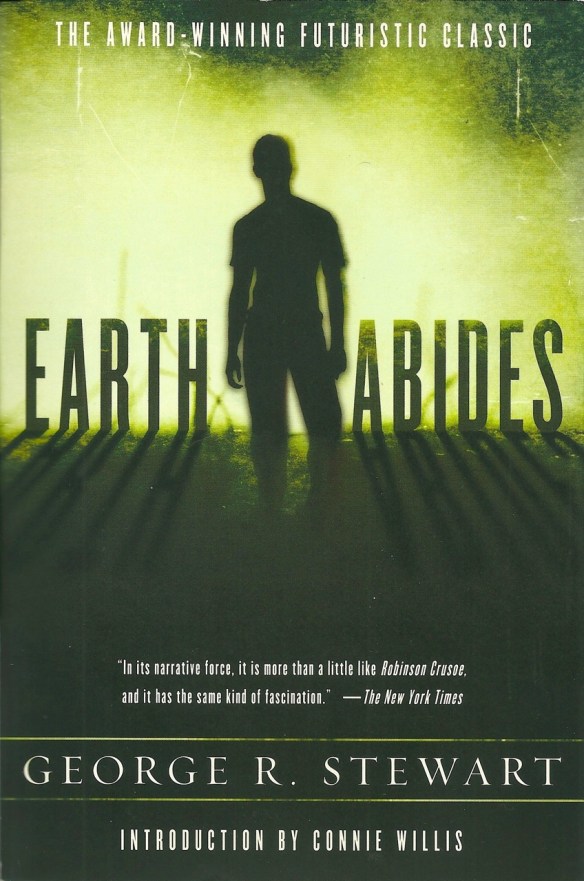
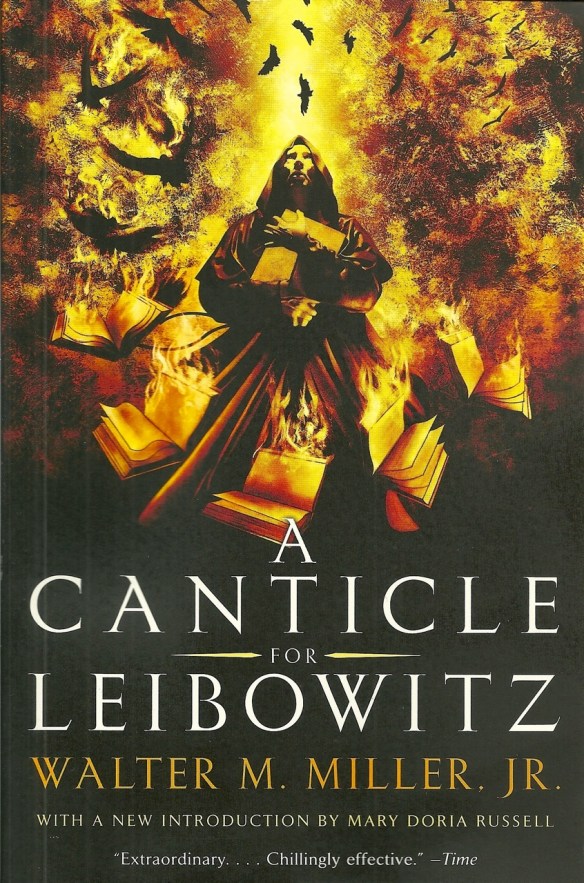
Here are two classic “after the end of the world” books. In Earth Abides, George R. Stewart’s end-of-the-world is by pandemic!, and in A Canticle for Leibowitz, Walter M. Miller Jr.’s is by post nuclear war taking America back to a Medieval Period, and then eventually over a few millennia to a new rocket and nuclear age, which ends as one would expect.
Stewart was an English professor at the University of California, Berkeley, in the 1930s-1940s, and his book here is from 1949. Amazingly prescient, realistic “speculative fiction” about the subsequent lives of the few survivors of the nearly overnight pandemic.
Miller’s book is definitely different, but there are no cheesy sci-fi gadgetry nor “special effects,” despite the strangeness of the worlds he portrays. Interestingly, the monastery life that is the center of Miller’s book is similar in many ways to the monastery life that is the center of Herman Hesse’s Magister Ludi (which is also a sort-of after the end of the world book, really of a “distant” future after the end of the fascist world).
I cannot imagine Miller’s vision becoming reality, but I can easily imagine Stewart’s coming about.
<><><><><><><>
The Twilight Zone
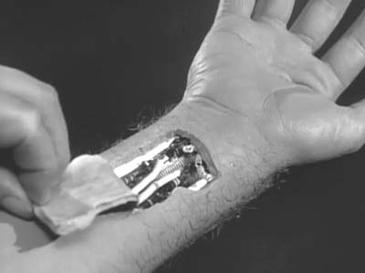
A PERSONALLY IMPORTANT LIFE GOAL OF MINE MET!
During this 2020 summer of hiding out from the pandemic, I watched all 156 episodes of the anthology TV show, THE TWILIGHT ZONE, which originally ran between 1959 and 1964. This feat was accomplished by seeing 2 to 6 episodes a night on consecutive nights over the course of several weeks.
This show is a collective work of TV art, guided by Rod Serling, who wrote 59% of the episodes. Amazingly, despite this show being in the neighborhood of 60 years old, its anachronisms relative to today’s typical attitudes and technological paraphernalia are infrequent (as regards the attitudes) and not distracting (as regards the technicalities). But it really shines in its depiction of the inner workings of human hearts and minds, and also human heartlessness. In this most important artistic-literary aspect, The Twilight Zone has not been surpassed by television shows since.
The Twilight Zone is a sequence of — usually — morality tales (interspersed with occasional comedies) whose telling is freed imaginatively and dramatically by allowing for the arbitrary actions of mysterious metaphysical forces. It’s as if Lafcadio Hearn, Ambrose Bierce and H. P. Lovecraft had been transported 60 years into their futures to write for television. One of the most thrilling aspects of Rod Serling’s Twilight Zone is the intense social consciousness, and anti-war, anti-greed, anti-bigotry and anti-cruelty attitudes nearly every minute of the entire series exudes. The acting, by many many actors, is uniformly excellent; and the production values of all the technicalities are also very good, but also very obviously more modest than in the costly productions of TV fare today.
In seeing the entire 156 episodes in one concentrated period of time, I have gotten a very clear appreciation of The Twilight Zone’s beauty and value as art. Without intending to be blasphemous, pretentious or dumb, let me say that I can see The Twilight Zone representing, for discerning American (and beyond?) viewers of the 1960s, a thought-provoking and socially instructive film-electronic art form in the same way that the plays of Sophocles, Euripides and Aristophanes were thought-provoking and socially instructive theatrical art forms to the Fifth-century Athenians.
The bubbling cauldron of social tensions, aspirations and fears of dynamic yet troubled societies were artistically abstracted and polished into the diamond-sharp facets of intense dramatic plays, reflecting the whole of contemporary society back into itself through the fascinated gaze of its individual people. If “the eyes are the mirror of the soul” then The Twilight Zone, through TV screens, was the mirror of the collective or societal American soul, which soul is always hidden behind a flashy loud and positivist front.
If you see the whole series, looking past the incidentals of its presentation, but deep into the essence of its conception, literateness and soul, you will see and hear as sharp and accurate depictions of the personalities and preoccupations of our society today as was the case for the American society of the early 1960s, during the show’s first run 61 to 56 years ago.
<><><><><><><>
John Keats, poet
Much feeling here, combined with a tremendous amount of work to present that feeling with refinement and grace of language, without dilution of the emotion, and without making it all seem a labored construction. Also wonderful feeling for nature and the natural world. I can’t criticize anything here, only try to learn from it. To my mind, Keats is to English poetry what Mozart is to music. Keats was a major influence on F. Scott Fitzgerald, who I see as an American “3rd generation” English Romantic poet who expressed his artistry in prose.
I have to dig into Shelley next (I have a huge tome), who was more “ferocious” than Keats. Both were very focussed artists. I’m struck by the idealism they felt and worked from.

<><><><><><><>
In Pursuit of the Unknown: 17 Equations That Changed the World, by Ian Stewart
Hello math lovers! (sic),
At one time or another a member of my family or friends has expressed an interest in:
Pythagoras’s Theorem (triangles, distance, areas, surfaces), or
Calculus (rates of change of anything and everything), or
Newton’s Law of Gravity (planetary motion, satellite trajectories), or
Pure Math (Napier’s Bones, the weirdness of the square root of -1, and Möbius Strip topology), or
Normal Distribution (the probability distribution of IQ, and “The Bell Curve” book), or
The Wave Equation (tones, semitones, musical scales, even tempering, beats within harmony), or
Fourier Transform (sines and cosines, single frequency/pitch modes and equalizers, digital camera images), or
The Navier-Stokes Equation (fluid flow, aerodynamics, F1 car design, global warming computation), or
Maxwell’s Equations (electricity, magnetism, radiation, wireless communication, TSA body scanners), or
Thermodynamics (entropy, efficiency of engines and renewable energy technology, disordering of the universe), or
Relativity (curved space-time, bent light rays, black holes, Big Bang, dark matter, dark energy), or
Quantum Mechanics (Schrödinger’s Cat, many parallel worlds, semiconductor electronics), or
Information Theory (codes, coding, data compression, digital communications), or
Chaos (species population dynamics with explosive growth and collapse, erratic unpredictability), or
Black-Scholes Equation (insane financial speculation, options, futures, derivatives, credit default swaps, the banking/real estate/financial crash of 2007-2008).
Because of that, here is my review of Ian Stewart’s 2012 book: In Pursuit of the Unknown: 17 Equations That Changed the World. Stewart says of his book: “This is the story of the ascent of humanity, told through 17 equations.”
This is an excellent enthralling book: interesting, very informative, very well written clear explanations of the mathematics and the applications of that mathematics to: classical mathematical calculations, lots of physics and related technology, information theory (codes and computers), chaos (wild swings in species populations), and the insane 21st century finance economics of our previous financial crash and its inevitable successors. This brief description does not in any way convey the complete range of this book.
On the front cover you can see the 17 (sets of) equations, which Stewart describes (and their many uses) over the course of 17 chapters. Of the 13 equations I feel confident about knowing something about (all “basic” math and/or mathematical physics), I find Stewart to be accurate and masterfully clear in his descriptions.
My only quibble is where he states about the main causes of global warming being the production of carbon dioxide and methane (gases) that: “These are greenhouse gases: they trap incoming radiation (heat) from the Sun.”
This is a collapsing of the actual mechanism, which is: the the capture of outgoing heat radiation (infrared radiation) by CO2 (most importantly) and CH4 (along with other heat-trapping molecular gases in trace amounts in the atmosphere), which upward radiated heat energy is derived from the earlier absorption (by the oceans and lands) of incoming light energy; a necessary process for cooling the Earth and stabilizing its temperature (if we didn’t mess with the process). So I would rephrase the Stewart sentence quoted as: “These are greenhouse gases: they trap outgoing radiation (heat) from the Earth.”
[If you think about it you will see that wherever the biosphere captures the incoming LIGHT from the Sun — in the air, lands or oceans — it ultimately heats to the same degree; but when our pollution intercepts and stores a greater portion of the re-radiated outward going HEAT (infrared radiation) from the biosphere than would be the case “naturally,” that the Earth’s “cooling system” is impaired and the biosphere warms up steadily, for an Earth out of heat balance.]
Regardless of this quibble, Stewart knows much much more about all the mathematics he presents and all the uses of it than I do. The 4 equations I knew nothing about (and learned about from Stewart) are: #1 Euler’s formula for polyhedra (topology); #2 information theory; #3 chaos theory (I know a little a bit about nonlinear dynamics, sensitivity to initial conditions, and limit cycles: similar to the “butterfly effect”); and #4 the Black-Scholes, or “Midas” equation that was heavily abused to produce the financial meltdown of 2007-2008. On these four, I learned a great deal from Stewart (basically everything I know about them now), and in the reading of this book I gained a sense of trust in his descriptions and pronouncements.
My only other critique of the book (and a minor one) is that there are a number of proofreading lapses (both of text and substance) that show up as typographical errors, and/or what I presume to be mischosen words (some obviously errors, others didn’t make sense to me). The few instances of these errors occur most frequently in the later chapters of the book, and none is fatal (especially if you don’t notice them). So, I agree with the praise for the book highlighted on the back cover.
I especially recommend the book for its explanation (in 8 chapters) of the physics of: classical gravity (Newtonian mechanics), waves, heat flow, fluid flow, electrodynamics, thermodynamics (entropy), relativity and quantum mechanics. I also appreciate his logical and scathing take-down of the modern hyperactive derivative-based financial speculation that dominates and threatens the world’s economies today. For me, the 8 physics chapters are superb; but there is no part of the book that is weak: “a wonderfully accessible book.”
<><><><><><><>
Upanishads
Juan Mascaró was a superb poetic translator. His selections from the Upanishads is enthralling. His translation of the Dhammapada was also wonderful:
“As the bee takes the essence of a flower and flies away without destroying its beauty and perfume, so let the sage wander in this life.” — The Dhammapada, 49
Joseph Campbell (author of The Hero With A Thousand Faces, editor of Heinrich Zimmer’s book The Philosophies of India) said of the Upanishads: “It’s all there.”

<><><><><><><>
Books I must add to my list of essential classics:
History of the Peloponnesian War (Thucydides, translated by Rex Warner)
The Plays of Euripides
The Plays of Sophocles
L’Avare (The Miser, a play by Molière)
Phèdre (Phaedra, a play by Racine)
The Picture of Dorian Gray (Oscar Wilde)
The Moon and Sixpence (W. Somerset Maugham)
The Razor’s Edge (W. Somerset Maugham)
Brave New World (Aldous Huxley)
Homage to Catalonia (George Orwell)
1984 (George Orwell)
Collected Essays (2002, George Orwell)
Bhagavad Gita (Swami Prabhavananda and Christopher Isherwood)
Bhagavad Gita (Juan Mascaró)
Memories, Dreams, Reflections (Carl Gustav Jung)
The Autobiography of Malcolm X (Malcolm X, with Alex Haley)
Cadillac Desert (Marc Reisner)
…and others as I think of them.









 manuelgarciajr