The American Freedom UBI and Tax Plan

52 State Flag (proposed); if add Puerto Rico and Washington, D.C.

This is a 1st Draft of a proposed economic plan for the United States of America. It does not solve everything, it just makes life generally better. I have yet to arrive to any objections to this plan, except for the discarded one of those who would be crying over “lost” imaginary profits.

“Universal Basic Income” (UBI) is defined here as:

  • $62,000/year (in 2020 dollars) per person, paid directly by government.
  • National Medicare Coverage at 100%:
  • – no age restrictions,
  • – medical, Rx, dental, vision, hearing, hospitalization,
  • – physical & occupational rehab, long-term & disability care,
  • – addiction rehab, hospice, funeral.

“Work” is defined here as:
32hours/week x 52 weeks = 1664 credited work hours per year,

  • with 8 calendar weeks of vacation+holidays
  • – (non-expiring accumulation, for days not taken within the year)
  • 3 years maternity or paternity leave (government funded)
  • minimum wage = $37/hour ($61,568 for 1664hours/year).

Tax Schedule for Individuals

  • “Tax” is defined as total of Federal+State+County+City taxes,
  • no deductions of any kind,
  • “Total Income” is defined as cumulative from all sources (i.e., includes capital gains),
  • “Taxable Income” is defined as (Total Income – $62,000)
    For:

(1)
Taxable Income = $0.
Tax = $0.

[no one has Total Income < $62,000]

(2)
$0 < Taxable Income < $938,000.
Tax = 17% x (Taxable Income/$62,000)^0.397
i.e. (4 examples):
0% for Total Income at $62,000;
[leaving $62,000 net income]
25% for Total Income at $225,788.57
[$40,947.14 tax, leaving $184,841.43 net income]
35% for Total Income at $444,264.78
[$133,792.67 tax, leaving $310,472.11 net income]
49.984% for Total Income at $1,000,000.
[$468,849.92 tax, leaving $531,150.08 net income]

(3)
$938,000 < Taxable Income < $999,938,000.
Tax = 38.335% x (Taxable Income/$62,000)^0.098
i.e. (2 examples):
50.028% for Total Income at $1,000,000.
[$469,266.76 tax, leaving $530,733.23 net income]
99.069% for Total Income at $1,000,000,000.
[$990,630,091.60 tax, leaving $9,369,908.40 net income]

(4)
Taxable Income > $999,938,000.
Tax = 99.1% x (Taxable Income)
i.e. (2 examples):
[$990,938,558.00 tax for Total Income = $1B; leaving $9,061,442.]
[$9,909,938,558.00 tax for Total Income = $10B; leaving $90,061,442.]

Corporate Taxes = 50% of Total Income, no deductions.

Stock Market Transaction Tax = 30% on every transaction/trade, whether electronic or in-person.

The U.S. military budget is mandated to remain below 1% of GDP (which was $22T in 2020),

  • – so under $220B (2020)

Climate Change Response, Energy Systems Transformation, Environmental-Biodiversity Restoration mandated to remain above 2.5% of GDP,

  • – so over $550B (2020)
  • – no fossil fuel subsidies
  • – no nuclear subsidies (beyond safe maintenance of legacy waste)
  • – steadily reduce Greenhouse Gas emissions annually to arrive a “0” by 2040
  • – plastic packaging banned
  • – all potable water systems bought up to maximum standards nationally.

Agriculture:

  • – regenerative agriculture mandated
  • – chemical pesticides banned

Internet:

  • – nationalized (free access)
  • – including social media

Guns:

  • – each gun must be insured at $1,000/year, to pay for gunshot victim injury and death costs, nationally.

<><><><><><><>

Eleven Capsule Disquisitions

SPACE: is filled with emptiness,
everything else is a garnish.

TOTALITY:
The unknown reality is of infinite depth;
but consciousness has limits,
which are unknown.

CONSCIOUSNESS:
The most captivating image to human consciousness
is the female form.

TIME:
No matter how much you think you have,
it is never enough.
No matter how much you actually have,
it will always be too little.

BOOKS:
A good book captivates you,
a great book changes you.

CAPITALISM:
Capitalism is the ideology of parasites.

GLOBAL WARMING:
Global Warming is the Universe’s way of telling us
that making money is contrary to Nature.

WAR:
War is a societally catastrophic theft by a group of criminals who compel two sets of victims to destroy each other. For decades I studied looking for the root causes of nuclear war, and then for war in all its forms: conventional, economic, genocidal, imperialistic, and now climate-destroying; and I have come to this: Lack of moral character expressed individually as selfishness through bigotry and greed, and organized socially as capitalism and exclusionary bureaucratic hierarchies for the defense of mediocrity.

PATRIARCHY:
The religious strictures enforced as sacred traditions by men against sex and women are them fleeing from the recognition of their own simplistic bestial lusts and fearful insecurity in their manhood, before the nurturing face of love seen by all as female: the mother.

GOVERNMENT:
It is always the rulers against the people,
and so in defense it has to be the people against the rulers.
What rulers everywhere fear most is the people united.

The first victory of political rebellion
is to free yourself from the self censorship
imposed by your fear of loss of approval by “authority.”

There will always be a new emergency to distract people
from the institutionalized theft of life they are paying for.

The fact that charities exist shows that governments are failures,
and moral character far too lacking all around.

Never underestimate the power of the Status Quo
to protect itself from reform
by tossing out members who have become liabilities.

I’m all for Socialism,
I’d just hate having to do it with Americans.

Being a Republican in these United States today
is to have an emotional attachment
to sexist White Supremacy ignorance.

THEM:
I only care about the effect of a person’s actions
on other individuals and on society;
I do not care how they choose to imagine
their relationship to eternity.

People can’t be changed,
they either evolve on their own,
or they persist as they are to the death.
The best you can do, for the rare few,
is tell them the truth if they ask.
I cannot change the world,
I can only affect the people I interact with:
rarely.

Going out among the people is the best way
to lose any concern about human extinction.

The effort to lead a moral life in an immoral society
causes much personal suffering,
only partially relieved by gaining
a righteous sense of self-respect.

The most pernicious idea in human history is:
profits.
The most important idea in human history is:
gratitude.

<><><><><><><>

Death-Grip by Fungal Ideas

Ants biting the underside of leaves as a result of infection by O. unilateralis. The top panel shows the whole leaf with the dense surrounding vegetation in the background and the lower panel shows a close up view of dead ant attached to a leaf vein. The stroma of the fungus emerges from the back of the ant’s head and the perithecia, from which spores are produced, grows from one side of this stroma, hence the species epithet. The photograph has been rotated 180 degrees to aid visualization.

<><><><><><><><><><><><><><><><><><><><><><><><><><><><><><><><>

Death-Grip by Fungal Ideas

On 4 November 2020, Jeffrey St. Clair wrote:

“I keep hoping that one day there’ll be a presidential candidate who just says very plainly: I don’t want to invade anyone else’s country or drone their wedding parties; I don’t want to torture anyone; I don’t want your family to go bankrupt from the bills for your daughter’s chemo; I want you to be paid fairly for the work you do and not be preyed upon by bill collectors when you’re unemployed; I want you to have a roof over your head and clean water to drink; I don’t want your kids to go hungry at school or be thrown in jail for smoking grass or be shot by the police while walking home from the 7/11; I want you to have time off to enjoy your life and not worry about your house burning down in a wildfire or being swept away in a hurricane. Is that too much to ask? Where is this person?”
— Jeffrey St. Clair (4 November 2020)

“People in hell want ice water, too.”
— Wendell “Moe” Beecher (1974, Gas Dynamics Lab, Princeton University)

Ophiocordyceps unilateralis fungus

A Scientific American article from 2009 describes the following [1]:

The Ophiocordyceps unilateralis fungus infects Camponotus leonardi ants that live in tropical rainforest trees. Once infected, the spore-possessed ant will climb down from its normal habitat and bite down on a leaf, with what the authors call a “death grip,” and then die.

After the ant death, the fungus begins growing hyphae inside the insect’s body; in a few days, the hyphae would emerge from the exoskeleton—”always … from a specific point at the back of the head,” write the authors of the study, which was led by Sandra Andersen of the Center for Social Evolution at the University of Copenhagen in Denmark. Within a week, the fungus had grown to about twice the length of the host ant’s body and had started sexual reproduction. Meanwhile, “the ant cuticle is … remodeled into a protective case by reinforcing the weaker parts,” and the parts of the fungus inside the ant’s body appear to differentiate into separate functions, write the researchers.

When the fungus releases spores, it creates what the authors describe as “an infectious ‘killing field'” about one square meter below the ant body that could infect C. leonardi ants or similar species that are unlucky enough to walk there.

Much more about the Ophiocordyceps unilateralis fungus is given in [2].

Alcon Blue Butterfly

Caterpillars of the Alcon Blue Butterfly have developed an outer coat that tricks ants into believing the young are their own because it smells like ant grubs, duping the ants into carrying the larvae back to their colonies to feed and care for, even at the expense of their own grubs since the Alcon Blue caterpillars smell like queen ant grubs, so the worker ants feed them preferentially. The Alcon Blue caterpillars grow fat in their ant nests, pupate, and then fly away to reproduce and continue their species’s parasitic life cycle.

Alcon Blue Butterflies are found in Europe and across the Palearctic to Siberia and Mongolia. They occur on damp meadows where Gentiana (Marsh Gentian, a purple 5-petal flower) grows; they are plentiful in such places, sometimes even in abundance, from the end of May into July, but in the North not before the end of June. [3]

SARS-CoV-2

The SARS-CoV-2 coronavirus that was first identified in Wuhan, China, in December 2019, has blindly evolved an ingenious strategy for perpetuating itself — perhaps indefinitely — through its host population: riding on human stupidity, impatience and selfishness.

Were people everywhere to follow the anti-pandemic protocols of:

– maintaining a greater than 2 meter distance from other individuals in public;

– self-quarantining for 2 weeks to ensure they are not infected before entering a new household or social environment since much viral spread is by asymptomatic carriers;

– wearing masks over their mouths and noses to prevent their breath-plumes, sneezes and coughs from spewing possibly infected droplets into the meters of airspace around them;

– thoroughly washing their hands often with soap and water (preferably hot), especially after contact with strange objects or people;

– avoiding gatherings, especially large ones, and especially for lengthy periods;

then the SARS-CoV-2 virus particles would have much greater difficulty finding and infecting hosts, and that virus species would eventually die out because of the decay and rupture of its particles’s outer lipid (fat) casings exposed to atmospheric oxygen and environmental heat.

Following this protocol requires discipline, patience and intelligence, because it is annoying. Our lack of discipline (to so regulate our personal behaviors), patience (to stick with the protocol for the duration of the pathogen species’s lifespan), and intelligence (to recognize the reality we must grapple with rationally, which has been exposed by scientific research), in aggregate is SARS-CoV-2’s winning strategy. It eats us out through our undisciplined emotionalism and our preferential fantasy ideas.

Capitalism

Capitalism — as championed by the United States and the high-carbon-footprint part of the International Community that surrenders all its mental capacity and moral character into the logic-bubble of Free Market speculation and finance — is a fungal idea among homo sapiens that causes them to destroy the environments and biodiversity of Planet Earth in frenzies of mineral extraction, overfishing, forest clearing, wildlife extinctions and soil depletion, so as to monetize these bites out of Nature for immediate short-term gains, while in the process spewing out enormous quantities of carbon dioxide and methane gases into the atmosphere (~12GtC/y, or ~42GtCO2/y, [4]) as the exhaust pollution of their so-called “economy.” All of this is hidden under the phrase “global warming” (“anthropogenic global warming” if you want to be a smarty-pants).

The rate of humanity’s CO2 and methane emissions is increasing annually, and global warming and ocean acidification (killing the marine food chain) are accelerating. If left unchecked, anthropogenic global warming will ultimately warm the planet and sterilize the oceans, so that the climate is too hot, too parched and Earth too food-depleted for our species to continue in its current numbers, and ultimately at all (if still here, we will know the ultimate trajectory of our fate within 2 centuries).

Is capitalism our Ophiocordyceps unilateralis, a mass psychosis causing our species to self-limit or even self-destruct, to open evolutionary space for other species (probably of bacteria) to evolve and explode their populations to dominate Life-On-Earth? Is it all part of Nature’s unfolding — or “God’s Plan” as the ‘intelligent design’ religious cultists would call it — to prod homo sapiens off the stage of Life-On-Earth after its scripted 200,000 year scene?

Why not? It is certainly hard to see humans as entirely self-actualizing rational beings who make logical decisions on the basis of scientifically verified facts, given the obvious zombification of so many of them by the mere presence of SARS-CoV-2 virus particles in the environment, and by the immateriality of the idea of ego-centric capitalist wealth that drives them wild.

Democratic Party

Tracing its heritage back to Thomas Jefferson and James Madison’s Democratic-Republican Party, the modern-day Democratic Party was founded around 1828 by supporters of Andrew Jackson, making it the world’s oldest active political party.

The wikipedia entry for the Democratic Party gives this capsule summary of its history:

Before 1860, the party supported limited government and state sovereignty while opposing a national bank and high tariffs. In the late 19th century, it continued to oppose high tariffs and had bitter internal debates on the gold standard. In the early 20th century, it supported progressive reforms and opposed imperialism. Since Franklin D. Roosevelt and his New Deal coalition in the 1930s, the Democratic Party has promoted a social liberal platform. Well into the 20th century, the party had conservative pro-business and Southern conservative-populist wings; following the New Deal, however, the conservative wing of the party largely withered outside the South. The New Deal coalition of 1932–1964 attracted strong support from voters of recent European extraction — many of whom were Catholics based in the cities. After the Civil Rights Act of 1964 and the Voting Rights Act of 1965, the core bases of the two parties shifted, with the Southern states becoming more reliably Republican in presidential politics and the Northeastern states becoming more reliably Democratic. The once-powerful labor union element became smaller after the 1970s, although the working class remains an important component of the Democratic base. People living in urban areas, women, college graduates, and millennials, as well as sexual, religious, and racial minorities, also tend to support the Democratic Party. [5]

The resentments over the diminished impunity of White Supremacy because of the Civil Rights Movement and Civil Rights legislation in the 1960s, along with the societal trauma of the Vietnam War, and the reactionary backlash to the law-and-order chaos spawned by antiwar sentiment and the massive routine racial discrimination, economic privation and violence against Blacks (e.g., the assassination of Rev. Martin Luther King, Jr. in April of 1968), which sparked major rioting in numerous cities, along with the economic recession of the 1970s, fueled the expansion of a reactionary, or “conservative” mindset that exploded out of the head of the body politic and into full view like an Ophiocordyceps unilateralis hyphae in the person of Ronald Reagan, the U.S. President inaugurated on 20 January 1981.

The neoliberal regime established by Margaret Thatcher in the United Kingdom in 1979, and Ronald Reagan in the United States in 1981, continues to this day: few restraints on corporate capitalist exploitation of the public commons (and human misery), with always diminishing support for human needs, and with economic austerity imposed on the wage-dependent public to pay for the enrichment of the wealthy.

To compete against the Republican Party — the shining knights of neoliberalism — in U.S. electoral jousts, the Democratic Party turned to new young leaders, beginning with Bill Clinton (U.S. President from 1992 to 2000), who led it away from concentrating on the defense and representation of the wage-dependent public and instead to seek corporate funding to underwrite the political campaigns and lush careerism of its leadership elite, who instead devoted themselves to facilitating the capitalist ambitions of their patrons.

So, the Democratic Party became the Republican Party of Dwight D. Eisenhower (U.S. President from 1952 to 1960, when the top income tax rate was 90%), while the Republican Party of Eisenhower hardened into the neofascist party of Ronald Reagan (1980-1988), George H. W. Bush (1988-1992), George W. Bush (2000-2008), and Donald Trump (2016-?).

The continuity of the neoliberal regime in the U.S. since 1980 was maintained by the post-1990 corporatist Democratic Party during its command of the White House during the administrations of Bill Clinton (1992-2000) and Barack Obama (2008-2016). In fairness to the Democrats, they were sometimes a little less rabid about forcing socially and behaviorally oppressive policies on the public (of AIDS-denial, and on: birth control, abortion, pollution and unionization, for example).

But, the electoral successes of the Democratic Party steadily declined — despite their acceptability to (or tolerance by) a wider range of Americans beyond Paled-Faced Capitalists — as they became less distinct from the Republican Party by their adherence in both word and deed to the neoliberal orthodoxy. Barack Obama even cited Ronald Reagan as one of his heroes and role models, instead of pissing on the memory of Reagan’s public evil (e.g., PATCO, Nicaragua, El Salvador, Guatemala, Grenada, South Africa, Iran-Contra) as any truly decent socially-conscious human being would want to do.

So, is the Democratic Party of the last 30 years a political Ophiocordyceps unilateralis fungal agent whose purpose is to zombify the struggling and not-always-alert wage-dependent American public to allow itself to be remorselessly eaten out for the perpetuation of neoliberal capitalism, which is only enjoyed by a select population of privileged societal Alcon Blue Butterflies (until Biosphere Environmental Collapse occurs)?

If the Democratic Party is intent to continue as a reliable electoral failure, despite toadying zealously for the corporatocracy (e.g., Hillary Clinton, Joe Biden, Kamala Harris, Nancy Pelosi, Chuck Schumer, Diane Feinstein), then the very least it could do would be to regain its self-respect and fight vigorously in the defense of the wide spectrum of individuals in the wage-dependent public whom it has long abandoned.

As the reelection yesterday (3 November 2020) of Alexandria Ocasio-Cortez, Ilhan Omar, Rashida Tlaib, and Ayanna Pressley, along with the election of Cori Bush in Missouri clearly shows, the championing of that public and their human needs against the predations of neoliberal capitalism and its attendant racism can have resounding electoral successes, because: “When you stand for nothing, you fall for everything.” [6]

Once an American mind has been seized by the brain-fever of neoliberal economics, why would it vote for its feeble imitation as the Democratic Party when it can get “the real thing” from the Republican Party, with the added bonus of being able to happily liberate repressed bigotries into the expansive shit-hole of Trumpofascism?

Death-Grip by Fungal Ideas

Our climb to escape from geophysical and socio-economic realities to latch onto self-terminating delusions, with both personal and societal death-grips, is caused by the zombification of people, our societies and our species into self-destructive behaviors for the benefit of external parasites, by the action of fungal ideas — mindless and non-material — : our fantastical and selfish ideas about the COVID-19 pandemic, about capitalism and neoliberal economics with its global warming denial, and about acquiescing to the shameless careerism and anti-democratic machinations of the corporatist ideologues of the Democratic Party.

Because those parasitic agents plaguing us can only infect us virtually — through ideas — unlike the actual materiality of the Ophiocordyceps unilateralis fungus and the SARS-CoV-2 virus particles, they can be most easily defeated by simply changing our thinking, which is done without fuss by people of rational mind who are disciplined, patient and intelligent. Unfortunately, not everybody is so constituted, and many people are purely reactive, as stated by Harmless’s Principle: “People don’t change until they feel pain.” [7] But this is not physiologically necessary, to the extent that cognition is free of disease and free-will has scope to operate.

We can act in our own best self-interests in ways that blend into decent life-affirming people-centric societies and political-economic government policies, that in turn mesh harmoniously with the workings of Nature to continue our species indefinitely, with sustainable energy and food production (e.g., Regenerative Agriculture [8]) in collaboration with the continuation of a bounteously biodiverse Life-On-Earth; at least until geophysical or astrophysical forces that are truly beyond human influence (e.g. another Chicxulub Meteor, or the Sun’s expansion into a Red Giant) dictate otherwise.

So I ask that you look upon the old saying “clearing the cobwebs from my mind” with a new more critical and motivated intent.

Notes

[1] Fungus Makes Zombie Ants Do All the Work
[A tropical fungus has adapted to infect ants and force them to chomp, with surprising specificity, into perfectly located leaves before killing them and taking over their bodies]
31 July 2009
Katherine Harmon
https://www.scientificamerican.com/article/fungus-makes-zombie-ants/

[2] Ophiocordyceps unilateralis
https://en.wikipedia.org/wiki/Ophiocordyceps_unilateralis

[3] Phengaris alcon
https://en.wikipedia.org/wiki/Phengaris_alcon

[4] GtC/y and GtCO2/y
GtC/y = giga metric tons of carbon per year = 10^9 tonnes/y of C;
GtCO2/y = giga metric tons of carbon dioxide per year = 10^9 tonnes/y of CO2.

[5] Democratic Party (United States)
https://en.wikipedia.org/wiki/Democratic_Party_(United_States)

[6] “If You Don’t Stand for Something, You’ll Fall for Anything”
https://quoteinvestigator.com/2014/02/18/stand-fall/

[7] Ann Harmless

[8] Kiss The Ground
https://kisstheground.com/

<><><><><><><>
ED: Election Day

52 State Flag (proposed); if add Puerto Rico and Washington, D.C.

<><><><><><><><><><><><><><><><><><><><><><><><><><><><><><><><>

ED: Election Day

I voted for the guy
who would destroy America
at a slower pace.
I’m sentimental, I have kids.

I’m all for Socialism,
I’d just hate having to do it
with Americans.

The Democrats are all for voting
so long as only they
and Republicans
get to do it.

The Republicans are against voting
for everyone
except themselves.

The U.S.A. is a capitalist democracy
which means
elections are bought.
“Bribery” is called
“campaign contributions.”

Why not have Election Week?
A paid time off
National Holiday
during which all votes
are easily counted.
(I know, I know:
there’s no profit in it,
and too damn much fairness.)

Why not have
Parliamentary Democracy?
(I know, I know:
there’s no profit in it,
and too damn much fairness.)

Vote for Blue no matter who?
or
Better Dead than Red?
Ave Imperator
E pluribus unum
Morituri te salutant.

<><><><><><><>

On Voting U.S.A. 2020

Many Americans are confused, conflicted and concerned about how and for whom they should vote by 3 November 2020. I say “by” because we all have the option to vote by mail, even though that option is imperiled in much of the country by campaigns of voter suppression and mail tampering by the crooks, criminals, cranks, crack-pots, conspirators, conspiracists, con-men and con-molls of the Trump mind-pithed death-cult.

The United States is not a country of overwhelmingly democratic sentiment. It was, after all, founded by a propertied and slave-owning White Male grande bourgeoisie resistant to colonial taxes imposed by 18th century Imperialist England; and it has resisted every popular social movement since to expand the franchise to life, liberty, prosperity, equality under the law, freedom of self-expression, and participation in democratic governance.

It is a country with the most propagandized population on the face of the Earth, ruled by a corporate-owned political class of mediocrities whose worship of power reveal their deepest instincts to be authoritarian, materialistic, careerist, sexist, white supremacist, and xenophobic. As a result, the “right to vote” is a precious commodity however unevenly it may be available and however tenuously it may affect the course of governance in favor of the public good.

The way for a citizenry to safeguard and expand any right they have been granted by their government is to use it massively, often and vigorously, even when the expectation of its transformative power is low. Today, the single best possibility for approaching a socialist-inspired revolution in the United States would be the overwhelming participation in knowledgeable voting by young Americans; those between the ages of 18 and 44, and most particularly those between the ages of 18 and 30. They should “all” register to vote, learn the realities about the available candidates, and vote carefully — not lackadaisically — at every opportunity available to them, so as to advance their interests which are uniformly: anti-war, anti-capitalist, anti-discriminatory, anti-sexist; and socialist, environmentalist, responsive to the global warming climate crisis, and thus most widely beneficial to the overall public good.

The 24% of Americans below the age of 18 are ineligible to vote. Of the older, eligible 76%:

– 16.78% are between 18 and 30 years old,

– 19.82% are between 30 and 44 years old,

– 26.4% are between 44 and 65 years old,

– 13% are 65 years or older (to ~100 years).

Thus, people 18 to 44 years old make up 36.6% of the population, while people 44 years and older make up 39.4% of the population. [1], [2]

U.S. Demographics 2010-2018

Older people are generally more conservative (reactionary) and consistent voters, while younger ones are generally more progressive — but unfortunately for themselves — less consistent, less informed and more lackadaisical voters.

What young Americans need to do in their own economic, political and social interests is to massively, knowledgeably and consistently vote despite having realistically low expectations of any rapid and significant socialist improvements resulting from any given U.S. election. Persistence is required for this “water on stone” process of national transformation.

Youthful outbursts of violent and destructive frustration in reaction to the intransigence of the status quo will be quickly quenched by far superior government firepower (applied with far lower moral restraint); and youthful surrender by escapism into sensory bubbles will simply mire them more deeply in the control and exploitation mechanisms of the ageist ‘corporatocracy’ managing national affairs.

What youth has on its side electorally is numbers, and a commonality of shared dreams and prospects which are being grossly abused by the status quo. The median age of the U.S. population is 38 years. There are as many eligible voters under the age of 46 (38% of the population) as over the age of 45 (38% of the population).

If young Americans can coalesce on a generalized socialist vision and stick with it even as they age, and they persist in applying that vision through their social practices and through the legal yet highly flawed mechanisms of voting in the United States, they would be able to shift the direction of all national policies.

It is important to remember that not all older voters are reactionaries, many of us still retain the dreams and visions of our glory days even if we appear to be feeble wrecks incapable of implementing anything. So the central cohesive element needed for a socialist transformation of the U.S. political economy is a strong popular and continuing socialist mindset — and thus allied progressive civic movements — among America’s young people.

The difficulty in sustaining such a socialist youth movement today is the obvious disincentive given by the nearly-guaranteed piss-poor results of U.S. electoral politics. We all know this is civic failure by design to maintain corporate-funded political corruption administered by careerist mediocrities. Rooting out that cancer will take a long time, perhaps an eternity (that is to say till human extinction). But offering it no resistance would be the ignominious suicide of human decency and our public moral character; and such resistance must necessarily be a multi-generational effort.

So I say vote we must even though it stinks. Offering American youth incentives of utopian hopes as likely outcomes from electoral “victories” in November of 2020, is dishonest. What is honest is telling them to be steeled by Raymond Aron’s observation that: the choice in politics is never between good and evil, but between the preferable and the detestable. Most of the time in U.S. elections we are not offered the opportunity to choose what and who we really want, we are only offered a very constrained set of options that range from the truly detestable to the relatively preferable.

What I see as the greatest failure of civic insight among American voters is them being overwhelmingly identity voters. Most people vote for reflections of themselves — really for reflections of their self-illusions — instead of for “imperfect” candidates of integrity committed to policies aimed at the overall public good. Identity politics is the greatest propaganda coup ever perpetrated on the American public by the American capitalist ‘corporatocracy.’

The drumbeat to vote for who looks like you and sounds like you and feels like you, or like your avuncular uncle, or like your wise and feisty aunt — without a thought as to who actually owns these candidates or what they are financially obligated to actually do and not do once elected — is unrelenting and earsplitting. Just turn on your TVs and computer mass-media streams and you get inundated by that propaganda.

The second greatest failure I see among progressive American voters is the inability of many of them — by their unwillingness — to be pragmatic when it comes to voting. Voting is a gross, slow, cumbersome and inaccurate tool for social change and improvement. It entirely lacks the sharp rapid elegance of a skillfully deployed scalpel (and the political equivalents of scalpels are bloody revolutions, which are more often tragic catastrophes), and it lacks the sustained political pressure of continuing mass movements.

Yes, it is easily possible to have a very far advanced socialist ideal in mind when voting, but no your co-visionary utopian political aspirants and microscopic political parties have no statistically significant probability of gaining any political power. So voting “for them” is purely an act of politically ineffectual egoism: you voted for your self-image. You will feel good about it, and that’s all. Voting for the country means getting over yourself. This is a major hurdle among people indoctrinated since infancy to mindless selfishness — and individualistic “exceptionalism” — by mass media in the service of your exploitative capitalist overlords.

In 2020, Americans have a civic duty and moral obligation to dethrone the Trump and Republican malignancy. Doing so will not immediately usher in a New Socialist Millennium, nor a United Federation of Planets, not any scintillating utopian fantasy of fully enlightened government. It will just be a necessary first step to a long, long projected recovery of political decency in this country. To accomplish that step — and the many needed after it — we have to accept reality, defy the propaganda, get over ourselves, persist in our socialist mass movements acting for political reform and the good of all, and persist in our voting despite its many deficiencies.

So far as I can tell, for the first time in its 208 year history The New England Journal of Medicine, one of the most prestigious peer-reviewed medical journals as well as the oldest continuously published one, has editorialized to endorse an electoral choice in a U.S. election: vote Trump and his partisans out. [3]

They begin that editorial with:

“Covid-19 has created a crisis throughout the world. This crisis has produced a test of leadership. With no good options to combat a novel pathogen, countries were forced to make hard choices about how to respond. Here in the United States, our leaders have failed that test. They have taken a crisis and turned it into a tragedy.”

The list of particulars that follows from this point in the NEJM indictment of the Trump Administration and its allied state government partisans is clear and damning (more than 200,000 Americans have died from Covid-19, a number equivalent to half the American fatalities in World War II); after which they conclude with the following:

“Anyone else who recklessly squandered lives and money in this way would be suffering legal consequences. Our leaders have largely claimed immunity for their actions. But this election gives us the power to render judgment. Reasonable people will certainly disagree about the many political positions taken by candidates. But truth is neither liberal nor conservative. When it comes to the response to the largest public health crisis of our time, our current political leaders have demonstrated that they are dangerously incompetent. We should not abet them and enable the deaths of thousands more Americans by allowing them to keep their jobs.”

To my mind, this should be the central focus of our pragmatic voting in 2020. It’s not about “you,” it’s about “us.”

Given human nature, there will always be new generations of fascists, bigots, religious fanatics, capitalists, careerists, exploiters, would-be slavers and criminals in American political life. So there can never be an enduring final victory of political good over political evil. To socialize a capitalist society, especially one as militarized, regressive and imperialistic as that of the United States, would take much more than just voting. The effort to advance American societal decency must necessarily be a continuing process of indeterminate duration.

Our utopian socialist visions should be used as compass needles to point our efforts past ourselves and in the direction our grudgingly pragmatic and personally imperfect steps should take on the way to that far horizon of our aspirations.

I have already mailed in my ballot. I wish more of my choices could have been reflections of how I like to think of myself, but “you can’t always get what you want.” [4]

NOTES

[1] Demographics of the United States
https://en.wikipedia.org/wiki/Demographics_of_the_United_States

[2] Population of the United States (2020 and historical)
https://www.worldometers.info/world-population/us-population/

[3] Dying in a Leadership Vacuum
The New England Journal of Medicine
8 October2020
https://www.nejm.org/doi/full/10.1056/NEJMe2029812

[4] You Can’t Always Get What You Want
https://youtu.be/krxU5Y9lCS8

<><><><><><><>

The Poetry of Disillusionment in “Gatsby” is Beyond the Movies

<><><><><><><><><><><><><><><><><><><><><><><><><><><><><><><><>

The Poetry of Disillusionment in “Gatsby” is Beyond the Movies

The Great Gatsby is a marvelous novel. F. Scott Fitzgerald was at heart a poet of the 19th Century English Romantic type, for that was the literature that clearly inspired him, as he himself said about his only academic focus during his college education (he being Princeton University’s most accomplished and famous non-graduate).

I was not too impressed with the latest (2013) glitzy movie of the novel, by Baz Luhrmann. Gatsby is so much about the poetic and lyrical use of language to convey emotionally, rather than logically (like my good science reports), the psychological states of the characters of the Gatsby tale.

A plot is always necessary of course, but in literary art it can be a mere skeleton on which to hang the real pulsing flesh of the story. Movies present plot first and foremost. The most artistically refined ones can give a sense of the poetry of experience, but this is not typical. The Baz Luhrmann movie was total Hollywood: big, flashy, loud, bombastic, hyper-realistically unreal, and impatient to blast you with a sensation.

Fitzgerald is just the opposite. Sure, there are big flashy loud extravagant background scenes in the Gatsby story, but they are really like painted backdrop curtains to the stage of the imagination on which the compelling psychologically vibrant interplays and soliloquies that fill the foreground of the tale are spun out by Fitzgerald’s prose. So I think a Hollywood movie, especially one intentionally a “blockbuster,” of the Gatsby story is just far from any art of Fitzgerald’s league, even if it has mass appeal as safe-decadent entertainment.

I suppose it could be possible for someone of the caliber of Jean Renoir to make a Gatsby movie that is much closer to the spirit of what Fitzgerald was striving for with prose, but I don’t think such a film masterpiece would have much appeal to general audiences. So, it would never be made because who in the movie business would put up the money to make a supremely artistic, psychologically subtle, and lyrical sure-fire flop?

Every movie of a novel is always a set of excerpts strung together as the filmmaker’s interpretation, or rip-off, of the novel. Can’t be helped. Douglas Sirk (the German director who made iconic 1950s American melodrama pictures with Rock Hudson) said that it was easier to make a good movie from a defective or second-rate novel, because the moviemakers (director and screen writers) could patch and fill the given story as they thought best to arrive at an integrated product that worked well as a mass-market movie. Really good novels had everything about the characters’s make-up and plot factors all tightly wrapped up “perfectly,” so there was no room to adjust the story to make for a popular movie without also degrading the quality of that story. It’s the old “the movie is not like the book.”

Some novels are too good to make equally good movies of. Catcher In The Rye is one, and its author, J. D. Salinger, refused to sell the film rights to any of his novels because he could only see movie versions degrading what he had produced for readers. The ideal prose-to-movie process (for both good prose and a good movie) would be having a superb writer craft tales specifically intended for being made into movies, where that writer was also a superb moviemaker, and who would make the film.

Rod Serling of Twilight Zone fame was such a writer-moviemaker. Serling had many beautiful turns of phrase flowing out of his commentary on his Twilight Zone episodes on TV, and mixed into the dialog of the characters in his stories. But Serling’s stories only spun on for 25 minutes (half hour shows) or 50 minutes (hour shows).

Fitzgerald’s novels have much longer and interwoven thematic arcs, and were meant to be absorbed by a reader over many, many hours, probably over the course of days, weeks. Fitzgerald really wrote for pre-TV even pre-movie 19th century hopeful young American minds (like his), but who had lived through the consciousness-shattering experiences and devastating losses of WWI, and were now making their way through the chaotically fragmenting 1920s, maybe sometimes crazy happy times but with many disappointments for most, since most were not rich and would never get to be.

So, I just don’t see how any movie can capture The Great Gatsby or Fitzgerald’s incredible, incredible second masterpiece Tender Is The Night. In my daydream of being a great screenwriter and movie director, I would do the impossible and make a lush compelling epic of Tender Is The Night, something with the cinematic scope of David Lean’s Lawrence of Arabia, and the psychological clarity and depth of Jean Renoir’s La Grande Illusion.

Perhaps my lack of enthusiasm for Baz Luhrmann’s movie (which I did watch attentively) is the reaction of a reader (instead of a non-reading movie fan) who was enchanted by the spell of Fitzgerald’s poetic and yet amazingly economical outpouring of prose that transmits the deep feeling of the Gatsby tale. I see little subtlety and glaring falsities in, and feel much bombast from the movie. You just fall so deeply into the story as told by Fitzgerald, especially with Nick Carraway as your guide into the lower psychological depths, but you are pushed back so hard and pocked with shrapnel by Luhrmann’s movie. It’s obvious that the brassy blare is what makes the movie “successful,” but that success is the exact opposite of what Fitzgerald gave us. (Yes, the movie would have to have been made by the Jean Renoir of La Grande Illusion and La Règle de Jeu.)

The Gatsby story is about the losses of optimistic illusions about American life and about romantic ideals, and then about attempted nobility failing at life while rich crass ignorance and bigotry triumph in the way parasites triumph by degrading the totality of the lives hosting them. Tom Buchanan is Trump, and Daisy Buchanan then as now is an airhead (not a shrewd careerist Melania), a simple pretty nonentity that has no intellectual depth but is pleasant to look and talk with, and on whom the love, longings and life ambitions of a driven man can be projected as movie myth is projected onto a silver screen and appear to shimmer with magical promise. That may be the most cinematic aspect of the novel, Daisy as a metaphor of the movies, magic by optical illusion and without any substance at all, which if believed in without reservation draws naïve optimistic romanticism to its actual doom.

Well, so much for my babble about Gatsby and movie attempts at Gatsby. As Peter Byrne has told me: “Never judge a book by its movie.”

<><><><><><><>

Life in the Ashes of Lotusland Dreams

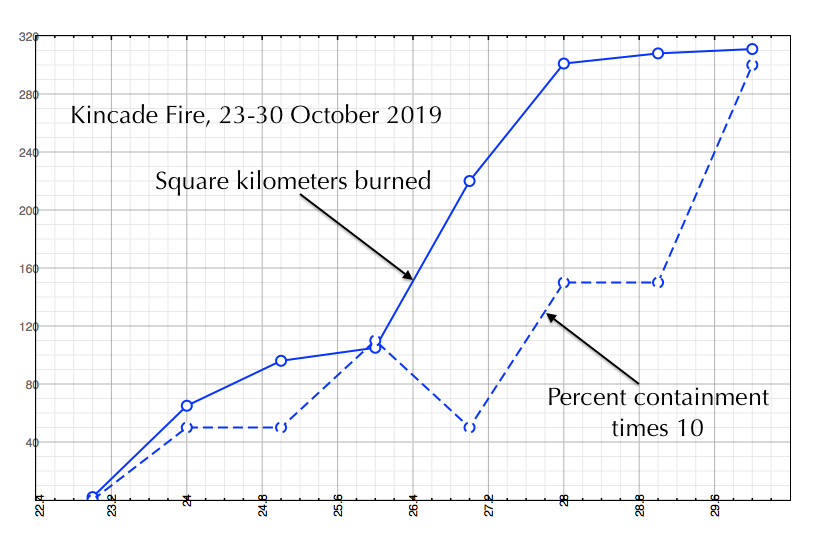
The Kincade Wildfire, currently burning in Sonoma County, California erupted at 9:24 PM on October 23 during an extreme wind event, east of Geyserville (77 miles or 124 km north of San Francisco). An area of 400 acres (2 square kilometers, 2 km^2) burned that evening. By October 30 the fire had burned an area of 76,825 acres (311 km^2), and was only 30% contained. The daily progress of the Kincade Fire is charted in the following figure.

“The cause of the fire has not yet been confirmed by a formal investigation, but a compulsory report shows that the fire started when a 230,000 volt transmission line failed near the point of origin, just before power was about to be shut off in the area” [1] as a precaution against anticipated high winds causing electrical lines and tree branches swinging into each other and sparking a wildfire in the parched hilly landscape.

During October 23 and 24, PG&E [Pacific Gas & Electric Company] carried out a massive power shut-off to nearly 940,000 customers in Northern California, this included a swathe of territory at the higher elevations of the Berkeley Hills (the low mountains behind the cities on the east side of San Francisco Bay). My home, in Oakland, was in this blackout. The winds died down on October 25, and my power was restored for a day; but this was not so in the blacked-out areas of Sonoma, Napa and Solano counties (and possibly also Marin County, and numerous counties further north). Another extreme wind event was anticipated for October 26 and 27, so PG&E began shutting off power in an attempt to prevent additional fires, leaving an estimated three million people (2.5 to 2.8 million) without power.

A 102 mph (164 kph) wind gust was recorded at Pine Flat at 3,300 feet (1000 meters) elevation, at 8 AM on October 27. A National Weather Service forecaster noted the wind speed on Twitter and shared that sustained winds had also “officially broke Hurricane Force (78 mph, or 126 kph).” [2] From the chart above, you can see how the area covered by the Kincade Fire expanded during these gusty conditions, between October 26 and October 28.

There were and are many severe wildfires raging in California north and south during this time (the Getty Fire in Los Angeles being one); the Kincade Fire is merely the largest current wildfire in the state. The Kincade Fire threatened over 90,000 structures (by October 30, 189 have been destroyed) and has caused widespread evacuations throughout Sonoma County, including the communities of Geyserville, Healdsburg, and Windsor. The majority of Sonoma County and parts of Lake County are under evacuation warnings.

There are 4,900 firefighters trying to contain and extinguish the Kincade Fire alone. Some of these firefighters are prisoners. “These are the people we write off, don’t allow to vote, don’t allow to become firemen once released” [3]; “people who are paid unconscionably low wages” for helping to keep so many of us safe. [4]

By October 28, power had been restored in my section of Oakland; it still remains off in most of the blacked-out territory in the northern counties (October 30), but I believe it is now slowly being restored in areas released from evacuation warnings.

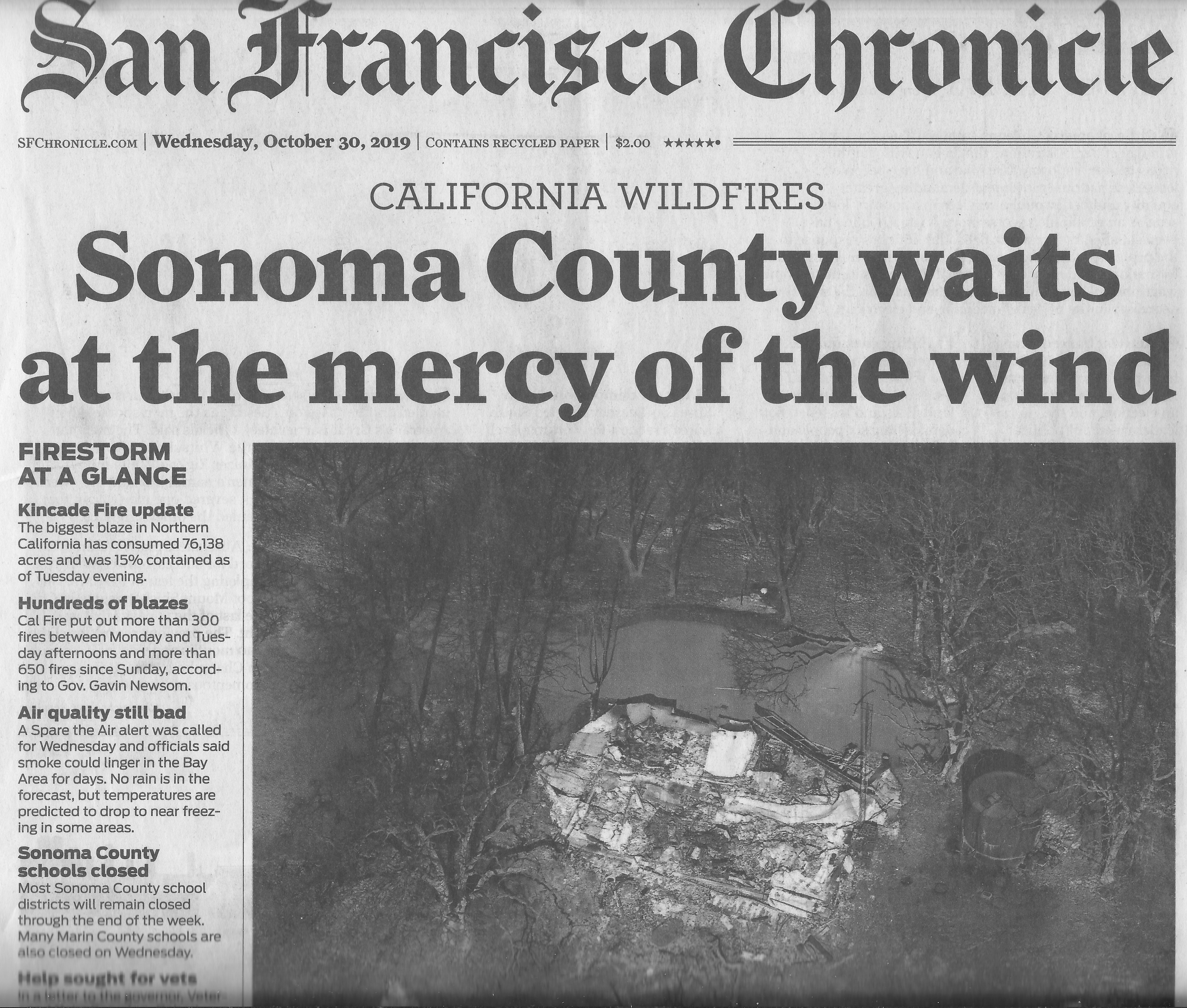
Cal Fire (the state agency dealing with wildfires) put out 300 fires between the 28th and 29th, and more than 650 fires since the 27th. Smoke will linger in the San Francisco Bay Area atmosphere for days, no rain is forecast and temperatures are predicted to drop to near freezing in some areas; and the winds are expected to die down after October 30. The Kincade Fire is expected to be 100% contained by November 7, 2019. Most Sonoma County school districts will remain closed through November 1, and many schools in Marin County were closed as of the 30th. The Secretary of Veterans Affairs in California demanded that Governor Gavin Newsom find a way to restore power to the numerous VA clinics that do not have backup power equipment. [5]

A Sonoma County man who used an oxygen ventilator to assist his breathing was reported to have died shortly after the electric power was cut to his home. [6] The power cuts and evacuations were very hard on people who are frail, infirmed or who require powered medical devices to assist and sustain them. The authorities had established evacuation centers to include the medically needy, but it seems not all of them made it to safety.

PG&E reported that 1.2 million people, in 28 California counties, have been without power since October 26. The process of restoring power can take 48 hours, and PG&E expressed the hope of beginning that process early on the 30th. [5]

There have been many calls now — as newspaper editorials, letters-to-the-editor, comments on social media, angry voices in the streets, and conversations through sporadic telephone connections between cold blacked-out homes — for the State of California to take over PG&E and run it as a publicly owned electric and gas utility.

Besides losing lights, reliable refrigeration (for food and medicine storage), the use of: electrically powered medical devices, electric cooking devices, wall-plugged electronics, recharging capability for battery-powered electronics and cellular telephones; many homes in more rural areas lost water because their local water company (or their own well) relies entirely on PG&E electricity to run the water pumps. It is no fun to not be able to flush in a blacked-out house for a week, unless you can find a way to haul in water. Running a gasoline-powered generator helps (if you have one, along with safe heavy-duty extension cords to run into the house), but this must be carefully done so as to avoid introducing carbon-monoxide fumes into the home (you’re stuck with the motor noise), and not cause a fire during your handling of the gasoline (which you must repeatedly travel to purchase) when replenishing the tank of the generator unit.

The losses of lives, property and homes to fire were the greatest tragedies that people suffered, and the large-scale evacuations and blacked-out sheltering-in-place were the most widespread hardships. But economic damage spread further in the form of lost wages by many lower-income workers in small businesses that were closed due to lack of power, and for restaurants the added impact of foodstuffs lost to spoilage with the loss of refrigeration. Large food supermarkets near me brought in self-contained refrigeration tractor-trailers to store perishable foods, or motor-generators to power the refrigerators in the stores. Either way, gasoline or diesel fuel was being burned (and exhaust gases emitted) locally to replace the missing PG&E electricity needed for refrigeration.

Nearby restaurants that were not in black-out zones were crowded through the week with us hungry refugees from the black-out; and our rate of expenditure for eating necessarily increased. Many of us refugees would also seek out electrical outlets at these restaurants and coffee houses, to recharge our cell phones and portable computers. I like to read books at night, and this became impossible without the use of some battery-powered light (and battery depletion would be a problem), or, more risky, with the use of candles.

The anxiety about lack of electrical power, and the uncertainty about when it would be restored was for so many otherwise prosperous and bountifully endowed Californians the visceral experience of a very noticeable decay of “the American way of life.” This was a sensible punch-in-the-gut by climate change (global warming, drought, wildfire) and not just climate change as an insubstantial verbal construct, an abstraction, a slogan. This was also an unpleasant visceral hint of what a descent into Third World living might be like, for a significant population of Americans (in California) who would otherwise unthinkingly continue with perhaps the most privileged lifestyles experienced by any mass population on Earth.

Some appreciation of the scope of the Kincade Fire can be gained by viewing the photo taken of it from by space by US astronaut Andrew Morgan. [7]

The Kincade Fire is the plume on the right, wafting toward the Pacific Ocean. San Francisco Bay occupies the left half of the image just below the coastline. The view from bottom to top is from east to west.

Another view of the Kincade Fire burn area is given by a 6 minute video recorded during a fly-over on October 29 by the Henry 1 helicopter of the Sonoma County Sheriff’s Department. It looks like a film clip of a US chopper flying over the burnt and blasted jungle hills of Vietnam 50 years ago (with a touch more suburban development) but without the sight and sound of explosions. (https://www.facebook.com/sonoma.sheriff/videos/1163763990678292/) [8]

“The wildfire season in the American West is now two and half months longer than 40 years ago. Wildfires are now four times more common and burn six times as much forest area. Some of today’s fires are so big and hot they burn the soil itself, and when that happens it can take up to a thousand years for the trees to grow back. By 2050 wildfires in the United States will be twice as destructive as they are now and each year will burn 20 million acres. An estimated 339,000 people die each year from smoke from wildfires. By 2050 we are expected to lose half of all the forests in the American West.” [9]

It seems that by November 1 the Kincade Fire and other smaller blazes in Northern California will be nearing full containment and total extinction, most evacuees will have returned to their homes — if they still have them — and those homes will regain electrical power, and the many workers temporarily put out of their wage-earning jobs because of the black-outs will once again be employed. But it could all happen again with the onset of another period of extreme wind during this dry season (please rain soon! but then we will have flooding and landslides because of the loss of soil-holding vegetation). And what of the dry seasons in the years to come?

Undoubtedly there will be swift recriminations, lawsuits, fights with insurance companies (and rate increases), political posturing and even perhaps useful actions in the California legislature and by the Governor’s office. With luck the political system of the State of California will swiftly develop new plans that are immediately put into action to devise strategies and infrastructure to better prevent the outbreak of such rapidly expanding wildfires, and reduce (ideally eliminate) the necessity of having widespread electrical power shut-offs during the highly windy days of our (global warming lengthening) fire season.

For an increasing number of Californians, the 20th century illusions about “the American way of life” have been lost in the dark of de-electrified homes with shut-off water, and gone up in the smoke of raging wildfires that extend to the horizons.

Notes

[1] Kincade Fire (30 October 2019)
https://en.wikipedia.org/wiki/Kincade_Fire

[2] SFGATE (a Facebook web-page of the San Francisco Chronicle newspaper)

[3] David Menschel, @davidminpdx

[4] Bay Area For Bernie (Facebook group)

[5] The San Francisco Chronicle, Wednesday, October 30, 2019

[6] Santa Rosa Press Democrat, October 24-27, 2019

[7] Kincade Fire from space, photo by Andrew Morgan
https://sfist.com/2019/10/30/heres-what-the-kincade-fire-looks-like-from-space/

[8] Kincade Fire, Henry 1 Fly Over (10/29 1:00pm)
Sonoma Sheriff
https://www.facebook.com/sonoma.sheriff/videos/1163763990678292/

[9] Climate Facts: Wildfire Season
11 October 2017
https://www.facebook.com/senatorsanders/videos/1511664332253953/

<><><><><><><>

Kincade Fire, FINAL, 6 November 2019, 7:00 PM
https://www.fire.ca.gov/media/10083/kincade-incident-update-11062019-pm.pdf

Sonoma County
active 14 days:
start -> 23 October 2019, 9:27 PM
cause: under investigation
77,758 Acres, vegetation
100% contained
374 structures destroyed
60 structures damaged
4 injuries (first responders only)

<><><><><><><>

I Rebel, Therefore We Exist, 2019

<><><><><><><><><><><><><><><><><><><><><><><><><><><><><><><><>

I Rebel, Therefore We Exist, 2019

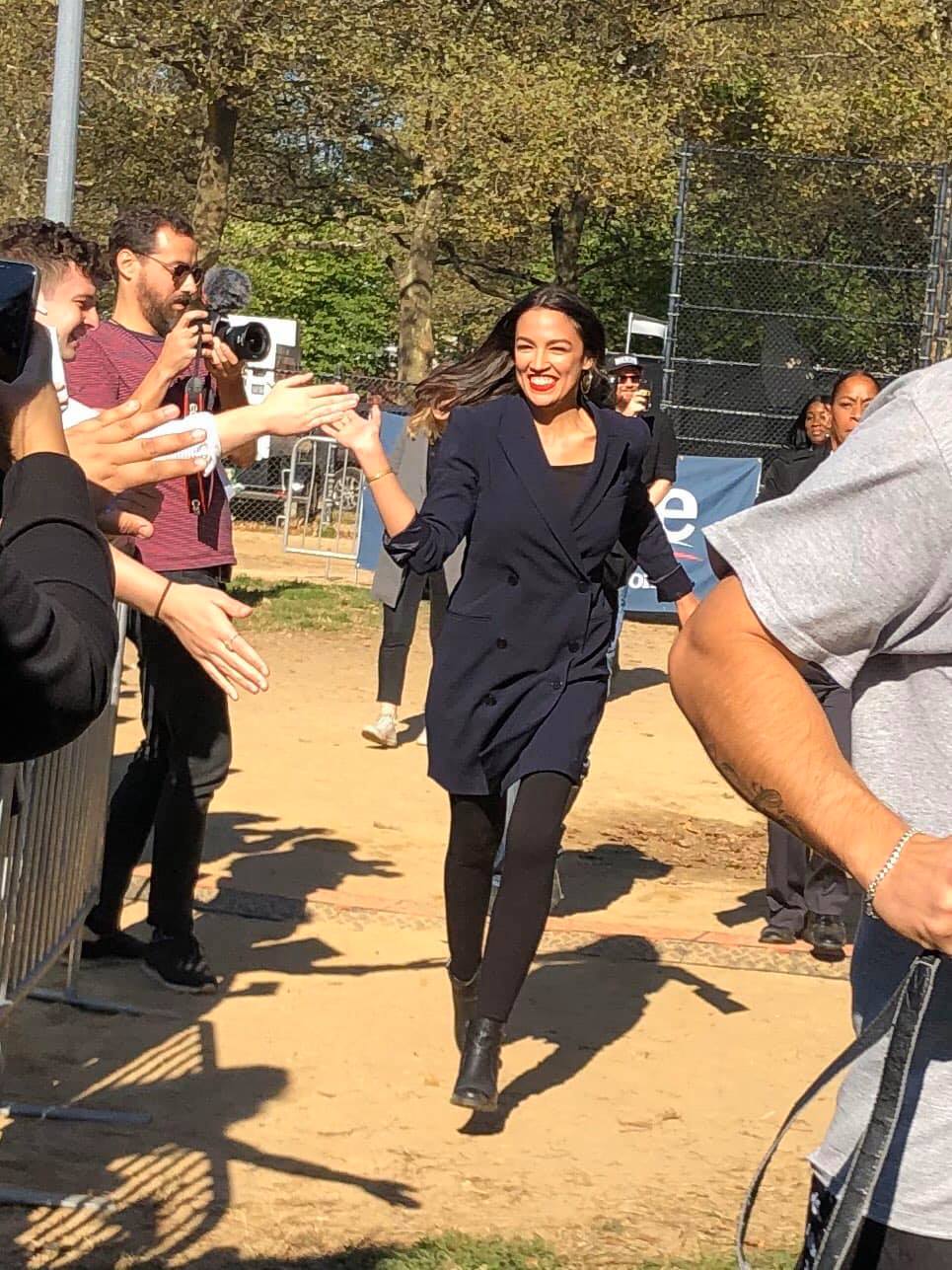
When Alexandria Ocasio-Cortez spoke of her origins and family today (19 October 2019), I remembered my own story because they are so similar. My mother, too, is a lovely Puertorriqueña; I too was born in the Boogie-Town island stolen from the American Indians (Manhattan); we too lived in Parkchester, in the Bronx, in a basement apartment (concrete floor, concrete walls, tiny windows at the top at shoe-level to the sidewalk); I too have felt the glass ceiling pushing me down (my whole career), along with other melanin-rich talent.

My rebellion was never as brilliantly insightful nor as spectacularly successful as Alexandria Ocasio-Cortez’s, but it still goes on in my own idiosyncratic and annoying way (my unpopularity is deserved, and I’m proud of it). So I can easily bypass the cynicism and miffed sense of superiority of the self-regarding left intelligentsia who are so obviously jealous of the genuine popularity — and political effectiveness — of Alexandria and Bernie.

I can relish the first possibility for a real change in American politics, economics and life that I’ve seen since my heart sank on November 8, 1980, when Ronald Reagan was elected president, defeating Jimmy Carter, and since December 8, 1980, when John Lennon was murdered and Ronald Reagan went on the air to defend guns and the NRA. It was so clear America was plunging into an abyss as blithely and stupidly as the British, French and Germans marched into World War I in 1914; and America has in every way, hasn’t it?

Maybe now, 39 years later, enough people have been hurt by the institutionalized criminality of the American political economy that many of the survivors of those times — the workers, not the parasites — and our new, younger generations are really ready to join up and actually create a successful revolution. I have no shame in appearing to be “utopian” or “dreamy” or “immature” or “foolish” or “naïve” in holding and vocally proclaiming such a hope and such a wish. Bernie’s got 9 years on me, so I’ve seen almost as much as he has of 20th and 21st century American and world history; and I know what can be because it already was once, I lived in it. And I want the best of the past for my three children (two older than AOC). And for their children if they have them, and for everybody’s children, and all children everywhere.

I want the thieves robbing today’s youth of their futures — as they rob and have robbed their wage-slave parents and grandparents — along with the unctuous slimy hypocritical bottom-feeding careerist political ass-kissers (you see them daily on TV) — who tell you a decent life for you is impossible, or costs too much, and who pimp justice to claw their way to the top — to rot in a hell for them where they are discarded, ignored, profitless and robustly taxed: a new American society that is socialist, and democratic, and universally just, and enthusiastically ethical and intelligent.

Vision must precede any reality that one wants to realize, and so in these times don’t repress your vision out of fear of the future or (worse yet) fear of your public image being ridiculed. Let your vision be grand, let it soar, because we want that vision to take us as far as the yet unknown political opportunities of the next year may allow us to go. Don’t be so fearful of being disappointed by the “imperfections” of whatever the political outcome is in 2020 and beyond, that you repress your thinking and emotions in favor of the entirely possible “impossible dream” that Bernie Sanders (above all others) has articulated to the nation.

The “revolution,” as Bernie calls it, will never be perfect, no revolution ever is, but that is not the point. The goal is to get as much revolution as American politics, physical reality, and the inherent chaos of the universe will allow the American people, united in both uplifting aspiration and just purpose, to achieve. And not just in 2020, but continually from this moment on.

So, again, I don’t care how foolish I look or sound. Over my life I’ve seen too much lying, betrayal and exploitation palmed off as “the way things must be,” and I also know the opportunity of a lifetime when I see it. We blew it in 2016, but by now it should be obvious to everybody that a tsunami of change must drown the cold dead vampire of American capitalism, beginning with the ballot boxes on November 3, 2020, and then continuing far beyond electoral politics into every aspect of American society and American life.

So go ahead, be “foolish,” have a dream, have vision, pump out the vibes, because every revolution is powered by a unity of human aspirations, and every advance of civilization occurs as a jolt along the fault-lines of human society: by revolution. “I rebel, therefore we exist.” (Thank you, Albert Camus.)

Videos of Bernie and AOC, 19 October 2019

“Bernie’s Back” Rally with AOC in New York
19 October 2019
[complete speeches by all, at the rally today]
1:31:50 Alexandria Ocasio-Cortez
1:51:10 AOC ->to-> Bernie
2:52:04 end of Bernie’s speech.
https://youtu.be/0HbS65oiN18

Rep. Alexandria Ocasio-Cortez Endorses Bernie For President
19 October 2019
[Solo studio video appearance, 3:05]
https://youtu.be/DDGf39NkZe0

AOC’s Bernie Endorsement: HIGHLIGHTS
[Excerpts of AOC’s address at the 19 Oct. 2019 rally, 5:54]
https://youtu.be/QW-Nx1g8EpI

<><><><><><><>

Happy 200th, Herman!

Herman Melville, 1870

<><><><><><><><><><><><><><><><><><><><><><><><><><><><><><><><>

Happy 200th, Herman!

The first of August 2019 is the 200th anniversary of the birth of Herman Melville, author of Moby-Dick or, the Whale (1851), as well as numerous other novels, short stories and much poetry.

Because of the depth of his thought as well as the range of his invention, Herman Melville (1 August 1819 – 28 September 1891) remains America’s greatest writer of literary fiction, and also one of its superior poets. I consider Mark Twain (Samuel Langhorne Clemens, 1835-1910) the quintessential American novelist because his masterwork, the novel Adventures of Huckleberry Finn (1885), is such an exquisite encapsulation of anti-slavery and anti-bigotry moral principle within a widely popular coming-of-age boy’s adventure story. But Melville is America’s deepest literary artist, his novels are metaphors for long-running threads of reality entwined as the American experience.

While Mark Twain’s facile humor and droll prose made him very popular with his 19th century audiences — both through publications and with live appearances — Herman Melville remained largely neglected during the last forty years of his life, by a reading public that was alienated by the complexity of his art. That complexity resulted from the combination of his literary sophistication, strongly influenced by the poetic language and moral insights of both William Shakespeare and the King James Bible; his personal philosophical thought as the fundamental source for his writing; his morally enlightened (non-racist) attitude about the world’s people; and the wit of his continuing critique, embedded in his fiction, of Americans’ myopic for-profit utilitarianism and obsessive hucksterism and con-artistry, which continues to this very day.

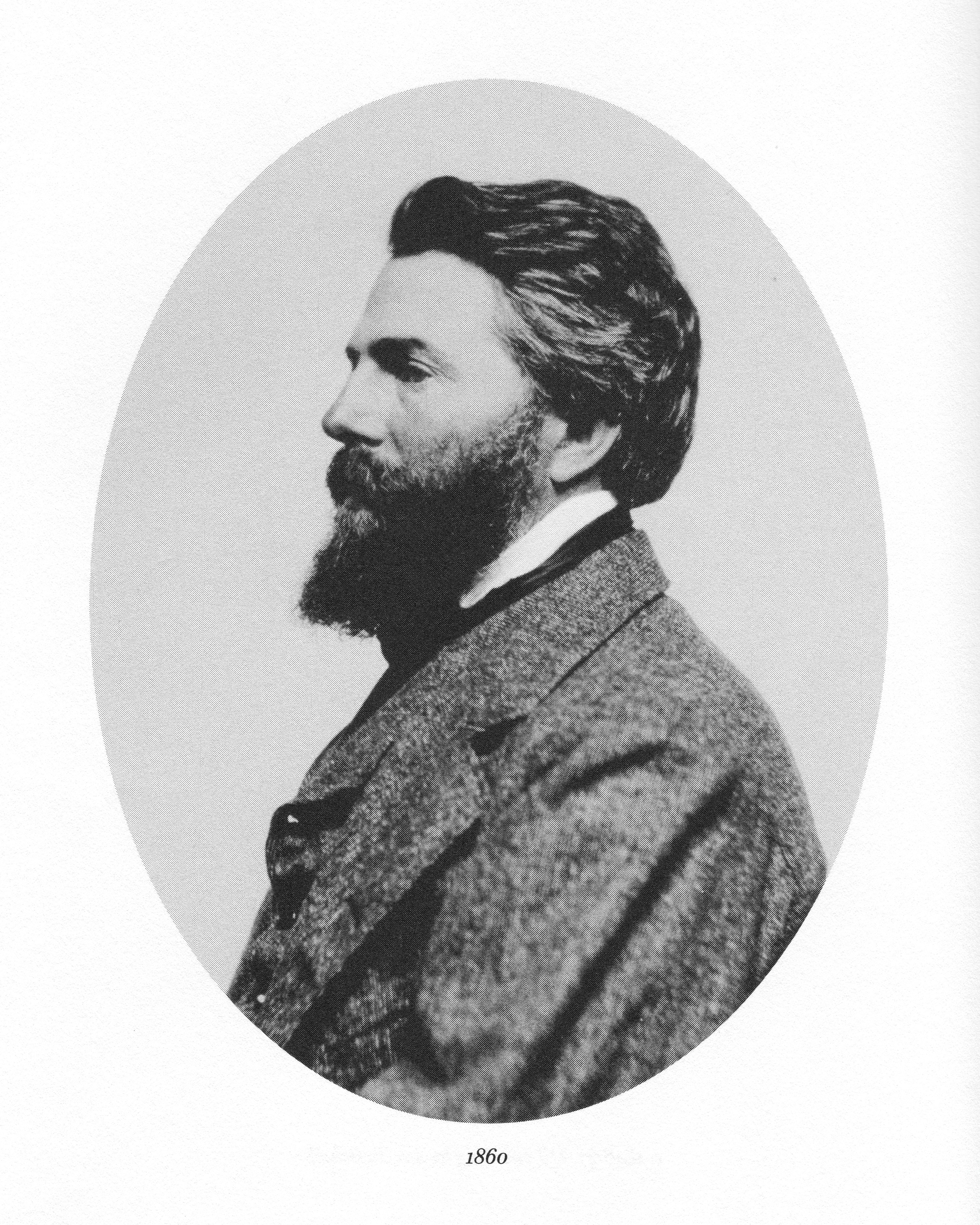
Herman Melville, 1860

I am no amateur scholar of Herman Melville and his literature, nor do I pretend to be. I am just one of millions of readers who since 1851 have been entranced by Melville’s masterpiece, Moby-Dick. I have read this book at least three times since 1961. With each reading I was older, more experienced, and was able to gain more insight about and appreciation for the literary use of the American language, and 19th America, out of the richness of Melville’s prose. I used the image of Captain Ahab’s monomaniacal and fatal obsession to hunt down and kill the white whale Moby Dick, in a recent article of my own, as a metaphor for humanity’s current obsession to continue racing with its self-destructive fossil-fueled capitalism, which is the profligate source of greenhouse gas emissions causing anthropogenic global warming climate change.

Many readers today would find Melville prolix, abstruse, convoluted, and with a confounding multifarious vocabulary. This obviates Melville’s work from achieving instant contemporary mass pop-appeal. However, that prolixity, abstruseness, convolution and wide-spectrum vocabulary we grumble about now could reflect the devolution of Americans’ thought processes and language from a measured 19th century pacing of consideration to a hurried jittery 21st century attention-deficit superficiality: the shorn American language of today, our no-brainer “New Speak.”

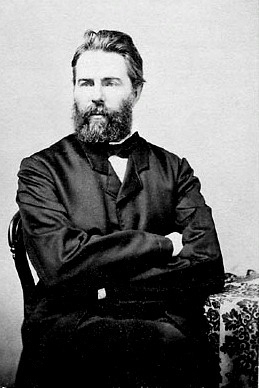
Herman Melville, 1861

Herman Melville gained popular success as an author with his initial novel Typee (1846), a romantic account of his experiences of Polynesian life, gathered during his time as a whaler and seaman in the South Pacific between early 1841 and late 1844. Typee was followed by a sequel, Omoo (1847), which was also successful and paid him enough to marry and start a family. His first novel not based on his own experiences, Mardi (1849), was not well received. His next fictional work, Redburn (1849), and his non-fiction White-Jacket (1850) were given better reviews but did not provide financial security. (1)

Moby-Dick (1851), although now considered one of the great American novels, was not well received among contemporary critics. His psychological novel, Pierre: or, The Ambiguities (1852) was also scorned by reviewers. From 1853 to 1856, Melville published short fiction in magazines which were collected in 1856 as The Piazza Tales. In 1857, he traveled to England and then toured the Near East. The Confidence-Man (1857) was the last prose work that he published. He moved to New York to take a position as Customs Inspector and turned to poetry. Battle-Pieces and Aspects of the War (1866) was his poetic reflection on the moral questions of the American Civil War. (1)

In 1867, his oldest child Malcolm died at home from a self-inflicted gunshot. Clarel: A Poem and Pilgrimage in the Holy Land was published in 1876, a metaphysical epic. In 1886, his son Stanwix died of apparent tuberculosis, and Melville retired. During his last years, he privately published two volumes of poetry, left one volume unpublished, and returned to prose of the sea. The novella Billy Budd was left unfinished at his death but was published posthumously in 1924. Melville died from cardiovascular disease in 1891. The 1919 centennial of his birth became the starting point of the “Melville Revival” with critics rediscovering his work and his major novels starting to become recognized as world classics of prominent importance to contemporary world literature. (1)

Most of Melville’s works can now be found on-line. (2)

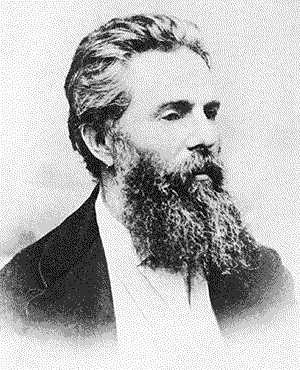
Herman Melville, 1868

A most interesting and knowledgable commentator on Herman Melville’s works is Louis Proyect, both because of his familiarity with Melville’s texts, and because of his discussions of how Melville’s themes are critically reflected in the social contexts of both the 19th century and today, and of how Melville’s anti-racist attitudes contrasted favorably with the “utilitarian” consensus of his times, and even ours. (3), (4), (5).

To end this commemoration of Herman Melville and his literature, on the occasion of his 200th birthday, I borrow the following paragraphs from Louis Proyect (3). Mark well what ye read here, for we need slake our forgetfulness and remember this conviction today.

Melville’s Redburn is one of his lesser-known books, but it comes as close to a conscious expression of the world we are trying to build as will be found in all of his works. He writes:

There is something in the contemplation of the mode in which America has been settled that, in a noble breast, would forever extinguish the prejudices of national dislikes. Settled by the people of all nations, all nations may claim her for their own. You cannot spill a drop of American blood without spilling the blood of the whole world. . .Our blood is as the flood of the Amazon, made of a thousand noble currents all pouring into one. We are not a nation, so much as a world. . .Our ancestry is lost in the universal pageantry; and Caesar and Alfred, St. Paul and Luther, and Homer and Shakespeare are as much ours as Washington, who is as much the world’s as our own. We are the heirs of all time, and with all nations we divide our inheritance. On this Western Hemisphere all tribes and peoples are forming into one federated whole; and there is a future which shall see the estranged children of Adam restored as to the old hearthstone in Eden.

Herman Melville, 1885

Notes

(1) Herman Melville
https://en.wikipedia.org/wiki/Herman_Melville

All images of Herman Melville here are from Wikipedia.

(2) The Life and Works of Herman Melville
http://www.melville.org/

(3) Deconstructing cannibalism
5 January 2016
https://louisproyect.org/2016/01/05/deconstructing-cannibalism/

includes Louis Proyect’s articles:

Shakespeare’s Tempest and the American Indian
6 December 1998

Herman Melville’s Typee: a Peep at Polynesian Life
18 October 2004

(4) The Confidence Man
23 December 2013
https://louisproyect.org/2013/12/23/the-confidence-man/

(5) Herman Melville and indigenous peoples
16 February 2008
https://louisproyect.org/2008/02/16/herman-melville-and-indigenous-peoples/

<><><><><><><>

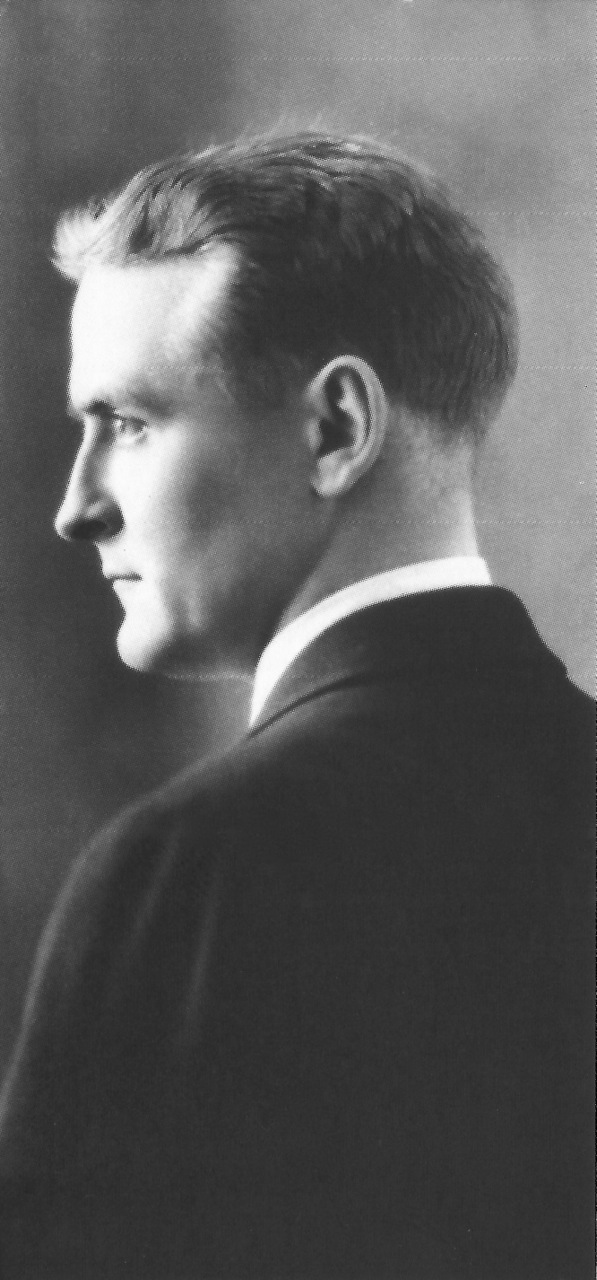
F. Scott Fitzgerald and Lost American Lyricism


<><><><><><><><><><><><><><><><><><><><><><><><><><><><><><><><>

F. Scott Fitzgerald and Lost American Lyricism

For me, the American writer F. Scott Fitzgerald (1896-1940) was an English Romantic Poet like John Keats (1795-1821), who experienced during his college years — that pivotal time of transition from youth to adulthood — the shock of World War I destroying the Belle Époque and unleashing the blaring, crass, destructive, frenzied and wasteful Youth Quake sociological explosion known as the Roaring Twenties, when the prewar Gilded Age was resuscitated — to eventually reach its apotheosis in Trumpian America — during the postwar prosperity of a hypocritically repressed Prohibition America that was an economic bubble flinging open the starting gates to the modernization of American manners, morals, rhythms, fantasies and expectations, and whose totality we have all experienced as the 20th Century, which we can date as the zeitgeist from 1919 to 2019.

The zeitgeist now is of self-evident global warming climate change, openly acknowledged by all except intransigent ultra wealthy buffoons clinging to their hoards and their pathetically transparent propaganda intended to ward off just taxation.

Fitzgerald was a literary artist, a lyrical romanticist who became the hip young voice of the 1920s outburst because he was able to apply his 19th century mindset and literary facility to articulate — as deep psychological insights of general applicability — his personal youthful experiences and observations of transiting through the World War I cultural shock wave thrusting his generation into the manic modernity of a vastly industrialized, depersonalized and entertainment-obsessed America.

It was because Fitzgerald’s conceptions had been formed in a previous social paradigm that he had a basis from which to objectively evaluate the new psycho-social realities of the 1920s. Younger and less alert people, whose entire awareness of social life awakened during the 1920s, lacked such a contrasting mental framework because they were blindingly immersed in, and distracted and buffeted by their times. Fitzgerald was young enough to be completely hip to and synchronized with the 1920s, but not too young to be unable to understand where the 1920s had emerged from, how they were different from the prewar past, and how they were experienced as matters of personal and societal character.

Fitzgerald, along with his older English contemporary W. Somerset Maugham (1874-1965), have given me the deepest psychological insights into women as men experience them, and into personal character as it expresses itself through interpersonal relationships, especially between the sexes.

A similar transition of American life occurred forty to fifty years later when the Vietnam War shattered the stability and stasis of 1950s America, from which erupted the cultural efflorescence and political turmoil of the late 1960s, which like the late 1920s burned off the general prosperity that had been accumulated during the economic boom hot-housed during the preceding period of victorious peace.

Culturally alert writers of the 1960s included Kurt Vonnegut, Jr. (1922-2007), Joseph Heller (1923-1999), Malcolm X (1925-1965) with Alex Haley (1921-1992), and Tennessee Williams (1911-1983). These writers were as different from F. Scott Fitzgerald as he was from Mark Twain (1835-1910), and none of these others matched Fitzgerald for lyricism, except for a memorable passage in Twain’s Huckleberry Finn — on the Mississippi River in early morning — and the calmly eloquent and reflective moments in Tennessee Williams’ dramas.

Fitzgerald was 14 when Twain died, and when Fitzgerald died at age 44 in 1940: Kurt Vonnegut, Jr. was 18, Joseph Heller was 17, Malcolm X was 15, Alex Haley was 19, and Tennessee Williams was 29. W. Somerset Maugham was 22 when F. Scott Fitzgerald was born, 36 when Mark Twain died, and 66 when F. Scott Fitzgerald died.

Twain’s war shocks were the American Civil War (1860-1865) and the Philippine-American War (1899-1902), while Vonnegut’s and Heller’s were World War II (1941-1945), primarily, and also the Korean War (1950-1953, for the hot war) and the Vietnam War (1954-1975, for the American phase).

Fitzgerald’s life was so timed that during the third decade of his life — and prime adult years — he also experienced the societal shock of the Crash of 1929 and its immediate aftermath, the Great Depression (1929-1942), when the outlandish and dissipative prosperity of 1920s capitalism collapsed into the socio-economic wreckage of the 1930s, with his own personal circumstances tumbling into ruins along with the times.

I find Fitzgerald’s keen insights on personal motivations and character, and on interpersonal relationships, to be far superior to those of both earlier and later American writers because of how his English Romantic Poetic frame of mind processed his experiences with youthful success and the allurements of fame while confronting the postwar shock of the new in the 1920s, followed by the collapse of illusions with the loss of wealth and social status in the 1930s, and all of that filtered through his intense emotions pulsing out of his marriage to and care for Zelda Sayre, his socially advanced and schizophrenic wife, and mother of his only child.

I can see why Fitzgeraldian lyricism was stripped out of American writing in reaction to the serial disappointments of the Great Depression, World War II, the Korean War, the sterility of the Tailfin ’50s, and the Vietnam War, and why Ernest Hemingway (1899-1961) and imitators of his arid style became popular to this day, given the post World War II re-acceleration of life’s American rhythm, and the relentless commercially driven dumbing down of the American mind.

The loss of lyricism from American literary fiction, since that of F. Scott Fitzgerald, is not a sign of its increased artistry and insight, but of the opposite.

<><><><><><><>