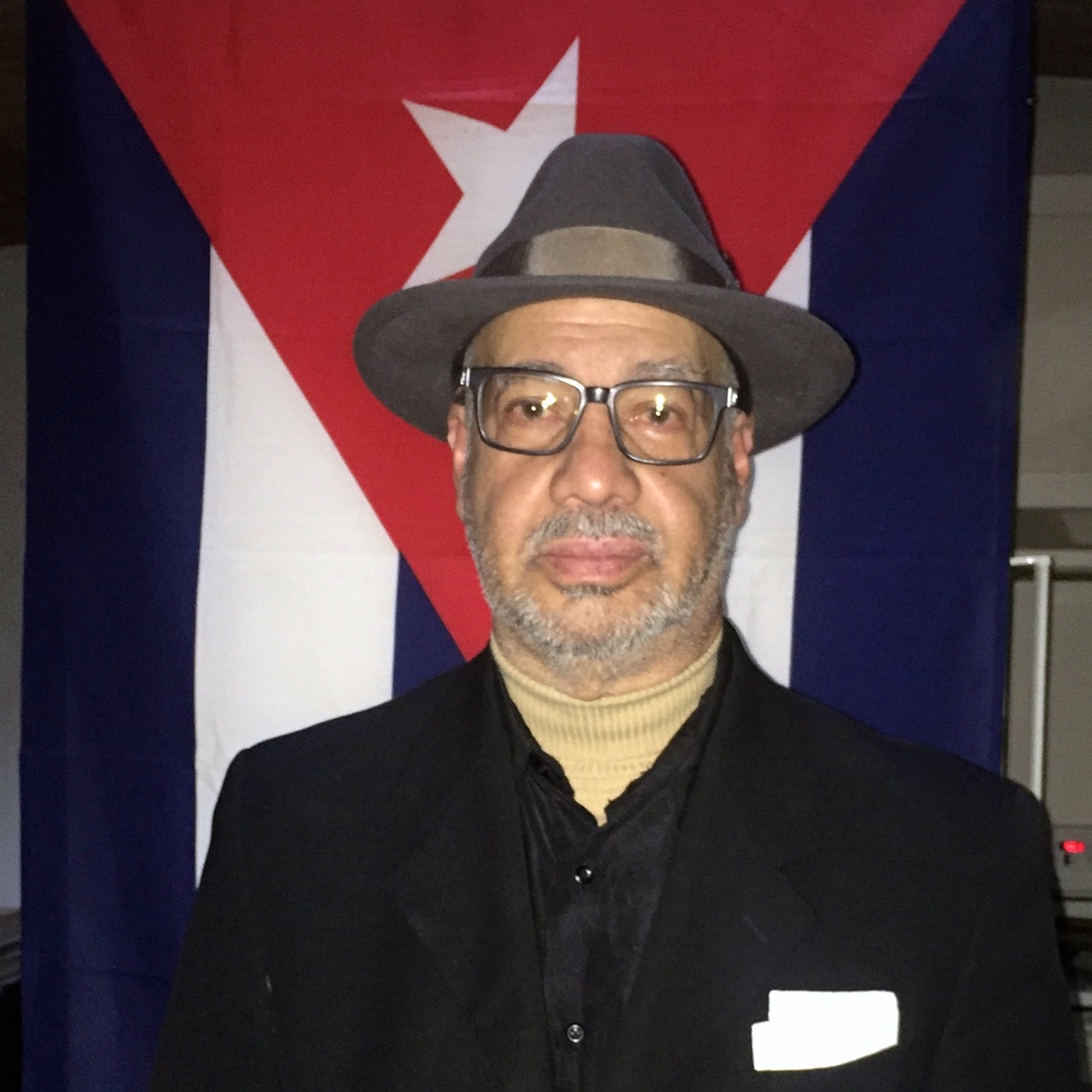
Freedom versus Slave Mind

Mejor morir a pie que vivir en rodillas

<><><><><><><><><><><><><><><><><><><><><><><><><><><><><><><><>

Freedom versus Slave Mind

White Supremacy will end with human extinction. The angry rage of conservatives and fundamentalists, in the face of godless skepticism, is really an anguished cry of: “don’t make us question our bigotry!” For working class people who can’t think better, White Supremacy is a psychological compensation for an inferiority complex. That complex is learned from infected parents, and indoctrinated into one by a capitalist class society intent to exploit and enslave people by controlling their minds with a programming for obedience to higher authority, a sense of inadequacy and neediness, and with race- and ethnicity-based prejudice, to cause disunity among the great mass of the working class. Working class white supremacists are simply abused children passing on their abuse to younger generations and lower seniority workers and employees: ignorant slaves seeking to compensate for their hidden lack of self-respect by trying to depreciate and enslave others “below them”. The capitalist upper class propagates this mass psychology illness of low self-esteem, neediness and bigotry, because it is the method by which the union of the rich few control the disunion of the poor many. “Divide and conquer” was how the Roman Empire was ruled, and so with America today. Ending White Supremacy before human extinction occurs would require a Marxist Revolution to full Communism. A first step to that political goal is Labor Union organizing so the Labor Union Movement expands to the point of controlling the national economy. Then a Social Revolution can occur, which ends all interpersonal prejudices. Such a political-social progression is the only way militarism-imperialism can be overcome, and Climate Change finally seriously confronted. Such a Paradigm Shift is deemed “impossible” by capitalist indoctrination in the Slave Mind. And it may be unlikely in your lifetime, but that does not prevent you from working toward that Paradigm Shift — The Revolution — beginning with your own transformation out of Slave Mind, and then with the activism and organizing you may choose to do. The Revolution is not merely a desired socio-political event at some time in the future during the course of human history, it is a living process carried within the individual lives of people who have freed themselves from Slave Mind, and by their living examples push back against the oppressors’s imposition of Slave Mind and its White Supremacy illness, even onto the last day of human existence if that is to be our collective fate. Be joyful in your freedom.

<><><><><><><>

José Mujica, Leadership by Example

What kind of World Leader do we need today? Prominent examples offered by a variety of nations include: Joe Biden (U.S. president, 2021-), Angela Merkel (chancellor of Germany, 2005-present), Emmanuel Macron (French president since 2017), Fumio Kishida (Prime Minister of Japan, 2021-), Boris Johnson (UK Prime Minister since 2019), Xi Jingping (President of the People’s Republic of China since 2013), Vladimir Putin (Russian president from 1999-2008 and 2012-present), and Bahsar al-Assad (Syrian president since 2000 and until human extinction).

Each of these leaders personifies a particular kind of socio-political regime, which variously you might be favorably disposed to or disapprove of depending on your own political and moral values. To my tastes, the absolute best national and world leader we could possibly have would be José Alberto “Pepe” Mujica Cordano, who was president of Uruguay during 2010 to 2015, or an individual just like him.

I was brought to this thought by recently seeing a number of movies and documentaries about Mujica, and the Tupamaros urban guerrilla group in which he got his start.

Tupamaros (https://en.wikipedia.org/wiki/Tupamaros), also known as the MLN-T (Movimiento de Liberación Nacional – Tupamaros, or Tupamaros – National Liberation Movement), was a left-wing urban guerrilla group in Uruguay in the 1960s and early 1970s. The Tupamaros started as a youthful group of students and professionals, and attracted trade union members and people of poor socio-economic status from rural areas. They formed in the 1960s during a time of instability in Uruguay caused by low food prices in Europe and Asia decreasing the value of exports from Uruguay and resulting in lower wages for unionized workers, fewer social services, and increased national tension accompanied by a diminishment of constitutional guarantees by an increasingly authoritarian government. In their low-level insurgency against the Uruguayan government, the Tupamaros killed 50 soldiers, policemen and also civilians. 300 Tupamaros died either in action or in prisons (mostly in 1972), and about 3,000 Tupamaros were also imprisoned.

In their early years, the Tupamaros avoided political violence, but increasingly violent pressure by the government’s military forces pushed them into low intensity guerrilla warfare in 1970, which continued until they were forcefully neutralized in 1972 by the Uruguayan army. ‘State of Siege’ (Etat de Siege) (https://youtu.be/rjv36b99JXk) is a 1972 film by Costa-Gavras about the 1970 kidnap-capture by the Tupamaros of Dan Mitrione, the American torture instructor to the militarized police forces of Uruguay. The Tupamaros’s aim in kidnapping Mitrione was to ransom him in exchange for imprisoned Tupamaros. Such a prisoner exchange was denied by Uruguay and the U.S. (during the Nixon-Kissinger regime), and Mitrione was later executed. [1]

The 2018 film ‘A Twelve Year Night’ (La Noche de 12 Años) (https://youtu.be/y97o1phiyRY) is about the capture, along with with murders, of Tupamaros urban socialist-communist guerrillas in 1972, with subsequent tortures and long brutal imprisonment in solitary confinement of nine specially selected and still surviving Tupamaros leaders, from 1973 to 1985. The last vestiges of Uruguayan democracy were removed in 1973 when the right-wing authoritarian government became a pure dictatorship. For more about this excellent movie, see [2].

What struck me as I watched ‘A Twelve Year Night’ was that it was more than just a searing Uruguayan story of personal struggles for survival by prisoners of conscience (between 1972 and 1985) within the larger context of the national struggle for political liberation and social transformation in Uruguay between 1967 and 1985, but by analogy it is also the more general story of the struggles for personal survival by prisoners of conscience worldwide, and of the many heartbreaking struggles of oppressed national-identity populations to gain their political liberation and decent and secure socio-economic lives. I also thought that if ever accurate movies were made about the US prisons at Abu Ghraib, Iraq, and at Guantanamo, Cuba, they would look much like ‘A Twelve Year Night’.

‘A Twelve-Year Night’ focussed on three of the nine ’special’ Tupamaros held and abused by the Uruguayan military for 13 years, with José Mujica being one of them. Mujica is an amazing individual. After his release from prison in 1985 and with the restoration of Uruguayan democracy and a new amnesty law, Mujica went on to reenter politics in 1989, become an deputy in the general elections of 1994, a senator in the elections of 1999, appointed Minister of Livestock, Agriculture and Fisheries in 2005, and was elected the 40th president of Uruguay in 2009, occupying that office from 2010 until 2015.

In his first speech as president-elect before a crowd of supporters, Mujica acknowledged his political adversaries and called for unity, stating that there would be no winners nor losers (“Ni vencidos, ni vencedores”). He added that “it is a mistake to think that power comes from above, when it comes from within the hearts of the masses… it has taken me a lifetime to learn this”. (https://en.wikipedia.org/wiki/Jos%C3%A9_Mujica)

During Mujica’s term as president: state-controlled sales of marijuana were legalized in order to fight drug-related crimes and address related health issues; laws were passed for same-sex marriage and legalized abortion; in a speech to the UN General Assembly in 2013, he “called on the international community to strengthen efforts to preserve the planet for future generations and highlighted the power of the financial systems and the impact of economic fallout on ordinary people. He urged a return to simplicity, with lives founded on human relationships, love, friendship, adventure, solidarity and family, instead of lives shackled to the economy and the markets.”

Between 2004 and 2014: the share of public expenditures in Uruguay for social needs rose from 60.9% to 75.5%, the national poverty rate was reduced from 18% to 9.7%, the minimum wage was raised from UYU$4,800 to UYU$10,000, and Uruguay became the most advanced country in the Americas in terms of respect for “fundamental labor rights, in particular freedom of association, the right to collective bargaining and the right to strike.” According to BBC correspondent Wyre Davies, “Mujica left office with a relatively healthy economy and with social stability those bigger neighbors could only dream of.”

As president, Mujica chose not to live in the presidential palace (as a waste of money) but on his wife’s farm outside Montevideo, and the presidential limousine during his term was his own blue 1987 Volkswagen Beetle, which he drives himself. That VW was valued at $1,800 in 2010 and was listed as the entirety of his personal wealth in the mandatory annual personal wealth declaration he filed that year. Because of his great popularity and admiration for him, in 2014 he was offered $1M for that car. He said that if he did get that $1M in exchange for his car that the money would be donated to house the homeless through a program that he supports. Mujica donated around 90% of his $12,000 monthly salary to charities that benefit poor people and small entrepreneurs. Mujica and his wife (since 2005, longtime partner Lucía Topolansky, a fellow former Tupamaros member, senator and former vice-president) have no children, live simply (with a three-legged dog), and continue making significant charitable donations to this day.

‘El Pepe, Una Vida Suprema’ is a wonderful documentary about and with Mujica, made in 2018 by Emir Kusturica (https://youtu.be/BsKVKgKuzHY). One of the most delightful scenes in this documentary is of Mujica driving himself from his farm to the transfer-of-presidential-power ceremony in Montevideo in 2015, with the entire route lined by cheering people, and the ceremony itself taking place before a massive throng of jubilant people celebrating him, and with a huge parade float in the shape of his blue VW on display. One point of access to this documentary is given at [3].

One of the most endearing portrayals of Mujica is that which he gives himself by speaking directly to the viewer, in a 10 minute excerpt from documentary ‘Human’ made by Yann Arthus-Bertrand in 2015 (https://youtu.be/4GX6a2WEA1Q). Of all the web-linked videos I have given in this article, at a minimum see this one. It should make it obvious why I would wish Mujica and people like him to be our political leaders.

NOTES

[1] ’State of Siege’ (trailer, en Français)

[2] ‘A Twelve Year Night’ (more about this movie)

https://en.wikipedia.org/wiki/A_Twelve-Year_Night

https://www.imdb.com/title/tt6792282/

https://www.netflix.com/title/80185375

[3] El Pepe, A Supreme Life (documentary)

https://www.netflix.com/title/81094074

<><><><><><><>

Political Belief And Self Image: Aron, OWS, And Libya

What are your political beliefs, and why do you hold them? Is it because by objective analysis you see them as most beneficial to the public good, and you are motivated by solidarity and patriotism to promote them? Is it because they help preserve a traditional way of life or culture, perhaps of a minority population, which you were born into or to which you have become devoted? Or, is it because your stated political views are part of a facade, which shields your actual motives and agenda from public view?


What we say we believe emanates from who we think we are. Dialog on political issues can often degenerate into ritual displays in defense of egos, and detached from the realities of the nominal issues. The more conscious we are about the roots of stated political beliefs, the easier we will find political debate arriving at a clear understanding of reality, and functional consensus for action on matters of mutual concern.
 
Raymond Aron and the Paris Intellectuals of the 1950s
 
The Opium of the Intellectuals, by Raymond Aron, was published in France in 1955. This book is a sociological study of the mid 20th century intelligentsia, and a polemic against ideological fanaticism. Aron opposed the pro-Soviet views of the French intelligentsia, as exhibited by prominent personalities like Jean-Paul Sartre and Maurice Merleau-Ponty. The crux of Aron’s argument was that Soviet-style communism was not in the interests of the French public because as a 19th century conception of the organization of an industrial society it was outmoded for 20th century France, and as a political system it was devoid of the personal liberties, especially of political free speech, prized by the fractious French.


Aron advocated “politics” in place of “revolution” as the means of changing French society, arguing that a modern industrialized state would progress toward a more just political economy, more swiftly and with far fewer personal tragedies, through reformism rather than violent revolution. Aron illustrated this by comparing the lag in socioeconomic development and the achievement of political stability in France in comparison to that of England during the century from 1789 (the French Revolution to the Third Republic).


Aron’s criticism of the legitimacy of the pro-communist belief of his contemporaries was not aimed at members of the Communist Parties in Europe (the true believers), but at the “communisants,” the French fellow-travelers who did not join the Communist Party in France, nor relocate to Communist countries, but condemned post-war American influence in Europe (“Atlanticism”), praised Marxist ideology, and never criticized the Soviet Union nor its actions in Eastern Europe.


“Seeking to explain the attitude of the intellectuals, merciless toward the failings of the democracies but ready to tolerate the worst crimes as long as they were committed in the name of the proper doctrines, I soon came across the sacred words Left, Revolution, Proletariat.” (The Opium of the Intellectuals)


It is possible to interpret the communisant attitude, which Aron criticized, as a defense of wounded pride. The Fall of France (1940) was not just a national catastrophe along the material dimensions of military and economic power, political independence, and social cohesion, but a psychological catastrophe as well. The humiliation imposed on the German people by the Treaty of Versailles (1919) was avenged twenty-one years later when France was placed under the control of a German Occupation and a collaborationist Vichy Government for over four years, a period we can bracket from the occupation of Paris to its liberation: June 14, 1940, to August 25, 1944.


The liberation of France began with the invasion of Europe by Allied forces, landing on the beaches of Normandy on June 6, 1944, and was completed by the end of World War II in Europe on May 8, 1945. Resistance organizations had formed themselves in every occupied country, and many of these irregular anti-Nazi fighters and agents were Communists. Immediately after WWII, the Communist parties of Western Europe had a well-deserved prestige because of the many risks taken and sacrifices made by Communist members of the Resistance.


Anyone from a country that had been occupied by the Germans, seeking some source of national pride to counter the humiliation of the occupation years, could at least look back and point to his country’s partisans.


The physical and economic ruin of Europe after WWII left the United States as the leading world power, and it applied its wealth to the rebuilding of Western Europe out of a mixture of motives: sympathy and goodwill, commercial self-interest, and a competition with the Soviet Union for political power: anti-communism. A major effort combining all these motivations was the Marshall Plan, which cycled $13B though Europe during the four years beginning in April 1948 (the U.S. had already contributed $12B in aid to Europe between the end of WWII and 1948).


Anyone who has suffered a calamity and then receives charity (which often has strings attached) can feel grateful up to the point where relief becomes overshadowed by resentment because of a growing sense of humiliation over one’s dependency. So it was with some Europeans in the early 1950s, when the United States and the Soviet Union locked horns in their Cold War and used Europe, Germany in particular, as their field of contention.


The Greek Civil War between the US-backed government and the Greek Communist Party lasted from March 1946 to October 1949. This was the beginning of US military assistance applied against the anti-Nazi partisans of the Occupation years. The Berlin Blockade, which was relieved by a NATO airlift, occurred between June 24, 1948, and May 12, 1949. Stalin died on March 5, 1953, and thwarted proletarian expectations erupted as the Uprising in East Germany on June 17, 1953. The Western European Union was founded on October 23, 1954, with the first inclusion of an independent West German state (the Federal Republic of Germany) into an economic and defense association of Atlantic Alliance (NATO) European nations, and which allowed the FRG to industrialize without restriction, and rearm. The Hungarian Uprising occurred during October 23 to November 10, 1956. Both the East German and Hungarian uprisings were ruthlessly suppressed by the Red Army and local paramilitary police troops.


In societies where there is wide public appreciation of their men and women of letters, the intellectuals belong to the elite class that interprets the nation to itself. The French intellectuals of the immediate postwar period were sensitive to the popular desire for a recovery of national pride, and also very sensitive to their own loss of importance in shaping the political narrative of their time. The centers of power affecting daily life throughout Europe were no longer Paris, London, and Berlin, but Moscow and Washington, D.C.


That the relatively unsophisticated Americans should have such wealth that they could act like a Salvation Army for derelict Western European nations; that they should have such military power that they could align their propped-up European charity cases like pawns in a geostrategic chess game with the Soviet Union; that America would gleefully spin the gears and pull the levers of politics in Western Europe and around the globe without the least thought to the wounded self-regard of France, or to the interpretations of history-in-the-making from one of the most brilliant sources of such narration in Western Civilization since the Enlightenment — the French intelligentsia — was galling to distraction, and shaped the pro-Soviet anti-Atlanticist orientation of a French intelligentsia seeking redemption and relevance.
 
Occupy Wall Street: The Face of American Deindustrialization
 
In the first decade or two after WWII, the Europeans could still easily recall many instances of the pre-war exploitation of working people, along with the more recent memories of the many hardships of the war years and the early postwar years (the latter with many high-casualty refugee movements). In his book about his flight from France in June 1940, Strictly Personal, W. Somerset Maugham describes the changed attitude of non-collaborationist French industrialists and military leaders regarding the French working class. Since the eventual liberation of France would be a painful labor largely carried out by working people, that future free France would necessarily be a nation whose industrially-generated wealth would be extensively socialized, as a simple matter of gratitude and justice. There would be no going back to the class relationships of the Third Republic. With this background in mind, the political builders of postwar Western Europe fashioned states that generally aimed at meeting Aron’s ideal: “An economy, liberal in its functioning, social in its goals, holds the most promise.” (Politics and History)


With the growing prosperity of Western Europe, working life was transformed from a proletarian to a bourgeois experience: “Wherever democratic socialism has been successful, the factory workers, having become petty bourgeois, no longer interest the intellectuals and are themselves no longer interested in ideologies. The improvement of their lot has both deprived them of the prestige of misfortune and withdrawn them from the temptation of violence.” (The Opium of the Intellectuals)


So, the heated existentialist-political debate between Atlanticism and Marxism in early 1950s France faded with the rising prosperity of the nation, driven by technological development. “The major fact of our age is neither socialism, nor capitalism, nor the intervention of the state, nor free enterprise: it is the monstrous development of technology and industry, of which the massive concentrations of workers in Detroit, Billancourt, Moscow, and Coventry are the consequence and symbol. Industrial society is the genus of which Soviet and Western societies are the species.” (Fanaticism, Prudence, and Faith)


Half a century later, we are witnessing a deindustrialization of the United States, slight deindustrialization in parts of Europe, and an accompanying industrialization of China, India, Malaysia, Thailand, the Philippines, South Africa, Turkey, Brazil, and Mexico. Once again, technology (electronics, robotics, telecommunications) facilitates the geographic shift of production to lower cost and more easily exploited labor pools, and the resulting changes to national prosperity produce public reactions that are controlled or distorted by local political factors.


The Occupy Wall Street (OWS) protest that has been in progress since September 17 in New York City, along with the many allied Occupy protests throughout the United States, have arisen in large part because of deindustrialization. Increasing redundancies in the American petty bourgeois workforce, at all levels of occupational skill, have forced many people to abandon previous career assumptions, and to question their own self images, because they are confronted by economic conditions that will not support making their original expectations real. Casting off an outmoded self image and then fashioning a new one can be a difficult and depressing task, to lose a dream is to lose a child of your mind. After that grief is finished, it can be liberating to successfully re-imagine yourself.


We can be sure that today millions of Americans are in a volatile psychological state, somewhere between realizing their original self image has become outmoded, and completing a robust reintegration of their psyche. They are awakening to new or reinforced political beliefs that will focus their subsequent social interactions in response to the changed economic realities in which they find themselves. The diversity and number of human beings that have been so callously shunted aside by the expatriation of the financialization-bewitched US economy is so great that no single mode of thought nor technically specific political demand can be expected to characterize the conclusions arrived at by Occupy Wall Street protesters and pilgrims and their sympathizers.


The appearance of the OWS movement in 2011 is obviously a direct result of the economic collapse of 2007-2008, but both the collapse and OWS are the fruits of Reaganomics: the divergence of the US economy from Aron’s economic ideal, since the Reagan Administration (1981-1988). We can anticipate that the many minds drawn into OWS will gravitate toward a thematic center-of-interest that we can label “economic fairness,” and which probably subdivides into five categories:


(1) personal debt relief,

(2) banking reform and financial market taxes,

(3) wide availability of diverse skilled employment,

(4) universal health and social security, a 35-hour work week,

(5) clean government: end corporate “personhood,” close tax loopholes, schedule equitable income and corporate taxes.


Marxism is an ideology originally developed to raise the expectations of a proletarian workforce in 19th century industrializing states. The growth of productivity during the 20th century, driven by “the monstrous development of technology and industry,” has elevated proletarian expectations by transforming the proletarians into petty bourgeois: they now have wealth beyond just their potential for manual labor, and their children. Ardor for revolution and enthusiasm for ideology have largely been lost during this transformation of the conditions of wage-earning life.


After thirty years of Reaganomics and “outsourcing,” or deindustrialization, and four years after the collapse of the financial bubble, the American workforce is suddenly confronted by economic conditions that undermine their now naturally petty bourgeois expectations. The prospect of having to downsize their dreams back to proletarian minimalism is clearly understood to be the foisting on them of the costs of the mismanagement of the US economy. Certainly, a wealthy class of politically well-connected speculators profited from the financial spectacle of the last decade, but their gains will cost the wider society far more than it could ever recover as a benefit because these speculators are richer.


The OWS movement is the face of petty bourgeois protest at the prospect of being pushed back into proletarian austerity. I do not anticipate a resurgence of Marxism in the near future because I cannot imagine American petty bourgeois people, however economically restricted, allowing themselves to assume a proletarian self image. It will be interesting to see how the OWS awakening expresses itself politically.
 
The Libyan Revolution and Progressivist Self Image
 
I began my investigation into the relationship between political belief and self image because of the forceful and emotional rejection of my views in support of the Libyan Revolution by progressive-minded correspondents in the left-wing Internet forums I frequented.
 
A Sketch of the Libyan Revolution


The Libyan Revolution broke out on February 15, 2011, and deposed Muammar Gaddafi, Libya’s dictator during the previous 42 years, who fled his compound in Tripoli and went into hiding on August 22, 2011, as National Transition Council (NTC, rebel) forces gained control of most of the capitol, and the country. Aside from scattered remnants of Gaddafi’s forces in Tripoli, the remaining loyalists still fighting were penned into five cities: Tarhuna, Sirte, Sabha, Bani Walid, and Hun. By late September, only Sirte and Bani Walid remained occupied by loyalists. Bani Walid fell to the NTC on October 17; and the loyalists in Sirte, Gaddafi’s birthplace, were concentrated into a narrow two-block area, with their arsenal reduced to machine guns and rocket-propelled grenades.


NTC fighters overran the last loyalist stronghold in Sirte on October 20, capturing a wounded Muammar Gaddafi who was apparently hiding in a storm drain, hustling him through the streets of a ruined Sirte amid a throng of ecstatic NTC fighters, and later delivering his body to a local hospital. It had two bullet wounds, in the head and chest. As I write on the 20th, fighting has ceased and the NTC is expected to declare Libya liberated, which then sets the date for democratic elections eight months later, to constitute the permanent successor government.


From its outbreak in the eastern city of Benghazi, the Libyan Revolution spread quickly through the country so that by the 25th of February most of Libya was under rebel control. Gaddafi controlled the cities of Tripoli, on the Mediterranean coast near the western border, as well as Sirte and Sabha. The revolution was a popular uprising; its fighters were civilians who had taken up arms and were joined by government troops who deserted. Gaddafi commanded the majority of the nation’s military forces, and thousands of mercenaries, primarily from African nations.


Because Libyan troops were reluctant to kill their own people, Gaddafi continually recruited mercenaries. Hundreds of Europeans were hired for specialized technical roles, such as pilots and military tacticians. Most of these fled by August. Thousands of black Africans were hired, like Tuaregs from Mali. The inducement of high pay to often impoverished men, and their lack of identification with the Arab and Berber culture of Libya, made the African mercenaries from the nations of the Sahel (the bio-geographic and climatic zone between the Sahara to the north and the savannas to the south) the most reliable killers at Gaddafi’s command.


In a televised address on the 23rd of February, Gaddafi stated that “Those who do not love me do not deserve to live.” During the 20 days between February 23 and March 15, Gaddafi’s forces recaptured most of the rebellious territory in the west and south, a particular exception being the coastal city of Misrata, east of Tripoli and west of Sirte.


On March 15, Gaddafi’s forces captured Brega and advanced east, beginning their assault on Ajdabiya, the last city along the road before Benghazi. In another public address, Gaddafi vowed to “bury” the rebels. Ajdabiya had been subjected to bombardment by Gaddafi’s air force since March 12, and on the 15th land and naval artillery barrages were added as well.


On March 17, Gaddafi’s forces captured Ajdabiya, about 120 km from Benghazi, and the United Nations Security Council adopted UN Resolution 1973 (2011), which authorized member states “to take all necessary measures… to protect civilians and civilian populated areas under threat of attack in the Libyan Arab Jamhariya, including Benghazi, while excluding an occupation force.” NATO military forces were set to intervene.


On March 18, Gaddafi’s forces captured Zuwetina, about 100 km from Benghazi, and continued their drive until within 50 km of Benghazi.


On March 19, Gaddafi’s troops and tanks entered the suburbs of Benghazi, while Gaddafi’s artillery and mortars shelled the city from about 20 km away. The first shots of the NATO military intervention were fired by French aircraft, and destroyed a convoy of 14 of Gaddafi’s tanks accompanied by several ammunition trucks.


With the NATO intervention now underway, and with increasing diplomatic recognition of, financial assistance for, and military equipment supplied to the three-week-old political organization of the revolution, the NTC, the rebel forces advanced from Benghazi toward Ajdabiya on the 20th of March, and this new rebel offensive began the five month push west to Tripoli.
 
The Human Right to Political Freedom


My support for the Libyan Revolution was a reflex based on the belief that freedom from dictatorship is a human right. I explained how I came to this belief in an article called “Libya 2011: The Human Right to Political Freedom,” which grew out of the despairing notes I wrote during Gaddafi’s offensive toward Benghazi. I anticipated a bloody purge of revolutionary sentiment in Libya after Gaddafi’s forces captured Benghazi. I recalled how Franco cemented his dictatorship and suppressed Republicans in Spain after the Civil War, between 1939 and 1942. I distributed a first draft of this article as an e-mail broadcast on March 30, and its final form was eventually posted on the Internet by Dissident Voice on May 3, 2011, accompanied by an editorial criticizing it.


In 1978, Raymond Aron explained his guiding political compass this way: “Of the two values invoked by our times, equality and freedom, I give first place to the second — not for intellectual comfort but as a result of historical experience.” (Politics and History)


I feel the same alignment, and in my article put the question to the left-wing world this way:


“So let me ask you, is it possible to have a bias for freedom, an opposition to dictatorship anywhere, and also oppose the capitalistimperialist consensus that dominates US and European foreign policymaking? Is it possible to support popular revolutions against tyrants and dictators — no matter how doctrinally appealing certain of them might be for some of us — even to the point of arming popular revolts so they can credibly match the firepower of their oppressors? In short, can anti-imperialists elevate freedom to a guiding principle?”


“Rules of Rebellion” is my second article about the Libyan Revolution, and was provoked by the largely negative reception to my first one (i.e., e-mailed criticisms, and publication rejections). “Rules of Rebellion” was written in the spirit of Jonathan Swift’s “A Modest Proposal,” and, because irony is unknown today, it was taken at face value and published on the Internet on April 6, 2011. “Rules of Rebellion” is presented as advice from the progressive “contented spectators” of the West, to would-be revolutionaries contemplating overthrowing their dictators:


“A revolution that fails to recognize the primacy of the anti-imperialist outcome, by either undermining an authoritarian anti-imperialist stalwart or failing to replace him with an untainted government of equal or greater anti-imperialist vigor, within a matter of days, does not deserve the support and respect of the enlightened and progressive world community.”


Revolutionaries around the world are urged, in the article, to realize that having their governments oppose US imperialism is an ideological mandate that outweighs the political freedom of their nation’s people, and even the lives of the revolutionaries. After the article appeared, I received letters asserting its overt argument as sincere belief.


On the day Gaddafi’s regime fell, I reflected on the doctrinairism that could be blind to the purges necessary to maintain its view of the world. Louis Proyect published my letter of August 22, 2011, “The Libyan Revolution and the Opium of the Intellectuals,” at his Web site, The Unrepentant Marxist. I recollected my clash with doctrine this way:


As I mentioned in my articles on Libya, the first priority was gaining the political freedom of the Libyan people, and preventing them from being massacred by their vengeful dictator. The blunt and inelegant instrument of a NATO intervention was the only means at hand capable of preventing a detestable outcome; capable of saving the lives of people who did not deserve to die. Whether or not the European and American governments, and corporations, were gaining economic and political advantages (the “humanitarian intervention” complex of modern left orthodoxy…) were unimportant considerations in comparison. Now that Libya is entering its liberated postwar period of political reconstruction, these considerations can be addressed, and by those who would be most affected by them, the Libyans themselves. It is so sad that so many leftists are so wrapped up in their politicized heads that they could obsess about “saving Libya from its Western saviors” to the complete disregard of the life-and-death struggle for political freedom by the Libyan people, the defeat of dictatorship. These political theorists must be relieved that the Syrian government has been untrammeled by Western interference in its rejection of its people’s rejection.
 
Anti-Imperialist Doctrinairism: Libya as Bosnia


“By doctrinairism I mean the attribution of universal value to a particular doctrine.” (Fanaticism, Prudence, and Faith)


A popular leftist doctrine today is opposition to “humanitarian interventions,” the use of Western military forces to control political outcomes in Third World (undeveloped and developing) and Second World (moderately developed) nations that are in distress, often with a civil conflict compounded by a humanitarian crisis. The doctrine congealed out of the many arguments over Western involvement (“interference,” interventions) in the wars that erupted during the breakup of Yugoslavia (1991-1995, 1998-1999), and in particular from the outcry against the NATO bombardment of Serbia (1999) during the UN military intervention in the Kosovo War (1998-1999).


From the leftist perspective, “humanitarian intervention” is a disingenuous label for imperialism carried out militarily for Washington-consensus capitalism by the United States leading its mainly Western European NATO allies.


This analysis justifies skepticism about the officially expressed motives for the use of US and NATO military power in any foreign conflict, as a third party. Proponents of an intervention can always find some iota of humanitarian need in the host nation to justify their case, and opponents can always find some suspicion of interventionist self-interest to justify non-intervention. The morally correct course of action for third parties should be indicated by which of these two poles lies closer to the public interest in the host nation, given its current specific conditions.


Interventionist self-interest actually has two classes: the leading economic and political class that directs foreign policy (or imperialism), and the general public whose labor, consumerism, taxes, and soldiering support the domestic basis of their nation’s foreign policy (or empire). Non-intervention is usually in the interest of the general public in the interventionist nation, from considerations of cost.


A third-party intervention is morally justified when conditions in the host nation indicate that it would be in their public interest, and when the public in the intervening nations willingly support the costs of the action. It is recognized that making such a determination is a matter of degree, there can never be a guarantee that a morally justified intervention will be completely free of any self-interest on the part of those intervening, nor be carried out without some errors and casualties. The need must be sufficiently dire, and the hazards sufficiently clear, that the responsible actors in both the host and third-party nations can see the potential benefits — to the host public — of the proposed intervention as far outweighing the unavoidable negative side effects.


From the above, it is evident that clear cases for morally justified interventions are rare. I believe Libya was one of those cases. Every case must be judged on its merits, on the specifics of the situation. We can be constant in our application of the principles outlined above to help us judge, but we should not close our minds to the plight of others because we have blinkered our thinking and walled off our empathy behind an absolutist doctrine that always equates third-party interventions to imperialism, and by a moralistic associative rule rejects all third-party interventions because of a self image as an anti-imperialist.


Libya is not Bosnia, Libya is not Kosovo; Libya is Libya.
 
Identify: Friend of Foe?


Are you a Democrat or a Republican?
I must know if you are friend or foe.

Are you a Marxist or bourgeois?
I must find if you’re my kind.

Are you populist or an elitist?
I must feel if you are real.

Are you a worker or are you an owner?
I must determine if you are vermin.

Are you a capitalist or anti-imperialist?
I must decide what you should abide.

Are you a militarist or are you a pacifist?
I must tell if you are well.

Are you a patriot or are you a dissident?
I must judge if you should trudge.

Are you progressive or are you conservative?
I must infer if you can concur.

Are you a believer or are you a skeptic?
I must learn if you should burn.

Are you right or are you left?
I must know if you are friend or foe.

I am right and I am left,
I am friend and you are foe.


One of the sadder realizations I gained from the negative responses to my articles in support of the Libyan Revolution was that some people with progressive political attitudes, being against war, racism, and violence, and believing in the entire complex of humanistic “peace and justice” values, examples of which easily come to mind with the use of that phrase, could express angry disapproval of me approaching hate in some instances, for essentially blaspheming against their doctrinal code. It was this that made me understand how deeply rooted in self image our political beliefs are.


We are emotionally invested in what we think of ourselves. For example, an anti-imperialist political belief can be rooted in a self image as a “good” person who is morally opposed to war, exploitative capitalism and the many forms of intolerance (e.g., racism). Perhaps these beliefs are applied in a rigid or fanatical manner because this person is uneducated, or irredeemably indoctrinated, or intellectually lazy, and so interprets and labels reality on the basis of a doctrinal code.


The doctrinal set is sacrosanct because it is rooted deep in the ego or self image of the person. The doctrinal set is expressed as a list of commandments; rules to be applied in the external world and that are actually extensions of the inner core of a person’s being. These doctrines are expressed as simplified ideas and phrases, code words that are, if you will, linguistic objects of depersonalized aspect for safe use in the world exterior to our persons (the exosomatic realm), but which actually encase tender parts of our spirit, emotionally charged aspects of our self definition.


For such a person, the defense of a doctrinally-held political belief is in reality a defense of their ego. To dispute another’s doctrinally-held belief is to attack the religion of a true believer.


The defense of the ego knows no barriers of courtesy, or logic, or truth. So, when I asked doctrinaire anti-interventionists how they could stand by and let Gaddafi’s forces take Benghazi, and then “bury” those who didn’t love him and so “deserved to die,” taking Gaddafi at his word as seemed reasonable given his history, I was told:


The rebels were Islamicists and Al Qaida (ergo, they deserved to die);

The rebels were against Pan-Africanism, and massacred blacks whenever possible (deserved to die);

The rebels were Libyan agents of Western-directed destabilization groups exploiting the mood of Arab Spring (deserved to die),

There really weren’t many rebels (too few to worry about dying),

Most of the Libyan people supported Gaddafi (then why was there a rebellion?).
The ego defense against sympathy for the rebels was quite simple: they don’t deserve to live, and there aren’t many of them. Even the most skeptical viewing of televised reporting from Libya put the lie to these assertions.


Other ego defenses were aimed at interventionist motives: the intervention was an oil grab, it was to depose a defender of Africa from US and European imperialism. Clearly, NATO countries that participated in the intervention will hope the successor government in Libya will remember them favorably when considering future business partners.


But the Europeans and Americans were already doing great business with Gaddafi’s Libya, that being the quid pro quo for his cooperation on nuclear disarmament, suppressing al Qaeda and withdrawing support from terrorist and/or insurgent organizations, restricting black African migration to Europe, and producing oil for the world market. The NATO countries did not need to incur the expense of their Libyan intervention in order to create commercial opportunities for themselves in Libya.


The final defense of doctrinally-held belief was an attack on the character of the blasphemer. How could I possibly agree to the NATO intervention when it was responsible for the slaughter of innocent men, women, and children? This made me equally guilty of the killing of babies in Tripoli. Did I want to personally plunge a knife into Aisha Gaddafi to stop her from rallying the people of Tripoli to her father’s cause?, because that was equivalent to my accepting a NATO intervention that rained bombs down on Tripoli.


It is pointless to respond to character attacks like this — they really have nothing to do with the person being attacked but instead show the desperation of an ego defending its doctrinally-held beliefs against the sense that they are unsupported by reality.


Muammar Gaddafi’s opposition to the Arab Spring-inspired popular protest movement in Libya degenerated into a war between a ruthless dictator with command of most of the nation’s military, and the lightly armed civilian population of the country. Given this balance of power and the history of Libya’s dictator, the world at large was faced with the choice of: acquiescing to a bloody suppression of the revolt, and probable purge of thousands of Libyans, by not intervening; or making a purge impossible by helping the revolt succeed, by intervening with decisive military force.


I think the second choice was by far the right one, as a matter of human decency for the greatest number of people, and because of that I accept that its implementation could never be “perfect” from every ethical and political perspective. It was the best course of action that circumstances allowed.


“In politics the choice is never between good and evil, but between the preferable and the detestable.” — Raymond Aron
 
Bibliography

Raymond Aron: The Opium of the Intellectuals, Transaction Publishers, 2001, (reprint of 1957 English language edition),

Raymond Aron: Politics and History, Transaction Publishers, 1984, (reprint of 1978 edition),

Raymond Aron: Fanaticism, Prudence, and Faith, (1956 essay revised, now an appendix in the reprinted The Opium of the Intellectuals).

W. Somerset Maugham: Strictly Personal, 1941.

Tony Judt: Postwar, A History of Europe Since 1945, Penguin Books, 2005.

Articles:

“Rules of Rebellion”
6 April 2011
http://dissidentvoice.org/2011/04/rules-of-rebellion/

“Libya 2011: The Human Right to Political Freedom”
3 May 2011
http://dissidentvoice.org/2011/05/libya-2011-the-human-right-to-political-freedom/

“The Libyan Revolution and the Opium of the Intellectuals”
22 August 2011
http://louisproyect.wordpress.com/2011/08/24/the-libyan-revolution-and-the-opium-of-the-intellectuals/

<><><><><><><>
Political Belief And Self Image: Aron, OWS, And Libya
7 November 2011
http://www.swans.com/library/art17/mgarci31.html

<><><><><><><>

’Stateless’, an Australian Television Drama about Refugee Detention

’The Trojan Women,’ a play by Euripides, was first performed in Athens 2,436 years ago at the height of the disastrous Peloponnesian War. It is considered a commentary on the capture of the Aegean island of Melos and the subsequent slaughter of its men and the enslavement of its women by the Athenians earlier that year, 415 BCE.

This play focuses on four women awaiting their fates after the fall of Troy (~1,200 BCE, in northwest Turkey near the Dardanelles): Hecuba (the wife of the slain king, Priam), Cassandra (the beautiful virginal daughter of Priam and Hecuba, who was blessed and then cursed by a lustful Apollo, with having a gift of prophesy none would listen to), Andromache (the wife of the great Trojan hero, Hector, who was slain by Achilles), and Helen (the Achaean queen and wife of King Menelaus of Sparta, who ran off with Paris to Troy, and which elopement was the purported cause for the Achaeans’s war against Troy).

The three Trojan women would all be made concubines and slaves by the Achaeans (mainland Greeks), and Helen returned to Menelaus. Because the Greeks wanted to ensure there would be no surviving male heir to the Trojan throne, they took Astyanax, the infant son of Hector and Andromache and the grandson of Priam and Hecuba, up to the high parapet of Troy and tossed him down to his death on the rocks below.

In 5th and 4th Century BCE Athens, the playwrights were known as poets and called teachers, and in ’The Trojan Woman’ Euripides was desperately and dramatically striving to teach the Athenians that the horrors of the Peloponnesian War were destroying the soul of their society, and that they should find ways of extricating their city-state from the war. His vehicle to convey that larger message to the Athenians was this dramatization of the final days in the death of the Trojan city-state eight centuries earlier (if in fact it was a single real historical event), as told in Greek myths recounted by legendary poets like Homer and his many forgotten colleagues.

’Stateless’, an Australian 6-part television series that was launched in 2020, is about a refugee and ‘illegal immigrant’ detention center, and strikes me as being similar to ‘The Trojan Woman’ as a societal teaching drama. It is both a searing depiction full of human and political insights about the current refugee crisis in Australia, as well as a close analogy for similar tragic realities along the US-Mexican border, in Libya and southern Italy, in Syria and the Greek Islands; and in other places where minorities and disfavored ‘others’ live precariously without stable statehood and are internally displaced or incarcerated, as in Syria, ‘Kurdistan’, Palestine, and the Xinjiang Uyghur Autonomous Region. The writers of ’Stateless’, Elise McCredie and Belinda Chayko have done a magnificent job. The directors, Emma Freeman and Jocelyn Moorhouse have made an absorbing and compelling visual work (https://www.netflix.com/title/81206211).

How many refugees are there around the world? The UN Refugee Agency, UNHCR (https://www.unhcr.org/figures-at-a-glance.html) states that: “At least 82.4 million people around the world have been forced to flee their homes. Among them are nearly 26.4 million refugees, around half of whom are under the age of 18. There are also millions of stateless people, who have been denied a nationality and lack access to basic rights such as education, health care, employment and freedom of movement. At [this] time 1 in every 95 people on earth has fled their home as a result of conflict or persecution.”

We must add that the deleterious effects of climate change — crop failures and lack of drinking water from extended droughts, and the loss of land, housing and employment due to violent weather and flooding — has also spurred refugee streams.

Those refugee streams flow out of the tropical and sub-tropical latitudes: from Africa northward across the Mediterranean Sea to Europe, up from Central America and Mexico and across the Caribbean Sea to North America, southward from Eastern Asia to Australia, and from the arid interior of the Middle East westward toward the Mediterranean Sea and Europe.

Americans, Europeans and Australians see these refugee streams as incoming waves of impoverished humanity comprised of dark-skinned people with cultures, mind frames and languages vastly different from their own, and thus a threat to American, European and Australian prosperity, and their existing ethnic balances, if too large an influx. We must realize that these refugee streams course back up along the gradients of wealth leading from the Global South to the Global North (and Australia), propelled by the pent up pressure of economic disparity created by over half a millennium of conquest and imperialism with over three centuries of slavery, by the White people of the north: the Europeans and the descendants of their American and other colonists.

The Australian television series ’Stateless’ is composed of a weave of four sub-plots, each about a person caught up in and then piteously twisted to the breaking point by the day-to-day reality of escalating crisis in the asylum-seeker Braxton Detention Center. All these stories are based on actual case histories. Threatened men and women become refugees and are driven to acts of desperation, they are victimized, families are torn apart, some eventually find sanctuary while many others languish indefinitely or perish. Low-level workers in the host countries looking to hang onto paychecks are shoved by higher level bureaucrats and policy-makers to go in and do the dirty work of “keeping a lid on” and also “making it look good for the public.” And the sanctimonious of all stripes on the outside are more often than not “virtue signaling” for their own ego boosts, than having any useful empathy for all the individuals mired in the toxic tangle of “the system.”

One story in ‘Stateless’ is based on the real case of Cornelia Rau, an Australian woman citizen who was emotionally disturbed at the time and who was inadvertently — and unlawfully — incarcerated by the Australian government’s Department of Immigration and Multicultural and Indigenous Affairs (DIMIA), and held for 10 months during 2004-2005 under the country’s mandatory detention policy for refugees, until Cornelia was traced to Braxton by a relative, and correctly identified and released to a hospital.

Another sub-plot focuses on an Afghani family fleeing the Taliban, being cheated and robbed by criminal human traffickers in Pakistan, being separated while attempting to make the perilous sea voyage to Australia in rickety boats, with the survivors eventually finding each other at Braxton. But the effort of the Afghani father to gain entry visas for his surviving family proves to be a very heartbreaking and essentially impossible effort. Despite some commendable humanitarian impulses by Australian workers tasked with maintaining the day-to-day operations of the center, and of some right-minded procedures embedded in the immigration policy, that policy is nevertheless largely fueled by a great deal of officially mandated bigotry and prejudice.

The conflict between offering a welcoming humanitarian response to the desperation of the trapped refugees terrified of being deported back to certain death, and the politically motivated mandates from the central government to maintain this bureaucratic structure for continuing exclusion, and without arousing public attention to it, is personified by the story of the woman appointed as the new director of the center. She is emotionally torn apart by the inherent cruelty of the job, and her political expendability to the remote higher-ups.

The last of the four sub-plots in ‘Stateless’ centers on a local rural freelance mechanic who seeks to leave precarity behind and support his young family with a steady paycheck earned working as a ‘prison’ guard at the detention center — though he is instructed that it is a refugee center and not a prison since its residents, despite having no freedom of motion, have not been placed there for the commission of crimes. This individual is a good-hearted fellow who quickly comes under unrelenting strain because of his repulsion at the cruelty toward unruly refugees by a sadistic guard, and because of the numerous requirements for him to perform rough enforcement actions on people exhibiting outbursts of anger, fear and madness. Both the emotional and physical traumas sustained in doing his job while trying to thread the needle between the frayed edges of UNHCR compassionate supervision of a precarious population, and the barbed razor sharp edges of bureaucratically enforced nationalism, nearly deaden his heart and rip apart his family.

Each of the four sub-plots in ‘Stateless’ is populated with many supporting characters who enrich the presentation, and the entire ensemble presents the full spectrum of human experiences that take place in the turbulent focal point of mixing-nonmixing between Australian society and Asian refugees at the Braxton Detention Center.

The ultimate solution to the world’s refugee crisis is so far out of view: ending all wars to establish a lasting world peace, and ensuring intelligent economic development up to decent standards everywhere so that people can remain in their countries with their families experiencing physical and economic security and good health down through the generations. Achieving these conditions would obviate the need for anyone to become a refugee and seek foreign asylum.

Yes, this is idealistic (naïvely so?, impossibly?), like wanting equitable worldwide cooperation to stop anthropogenic greenhouse gas emissions so as to tamp down the acceleration of global warming. But neither of these ideals is intrinsically impossible to actualize, and that is why the continuation of the refugee and climate crises are such tragedies: they are fundamentally unnecessary sorrows, open and festering wounds on the body of humanity.

What we have today is a compounded system of exploitation through tiered victimhood, a system commanded by über capitalists and nationalistic warlords living luxuriant lives, and served by hierarchical cascades of lower level petty boss bureaucrats, their functionaries, and in turn their laborers and armed enforcers. This system is so abhorrent that Nature itself has abandoned us, and is trying to burn us off the land and wash us away into the seas and oceans we have thoughtlessly poisoned with our wastes. An added cruelty to this accelerating rejection of humanity by Nature is that those who are suffering now, and first, and will suffer the most from the increasing hostility of Earth’s climatic conditions to human life are the people of the Global South (the Third World), the regions from which today’s refugee streams emerge, the poorest of Earth’s people, those who lead the most precarious lives, and those who contributed the least to the creation of the global climate crisis.

Coda: a Meditation on ’Stateless’

Must I have a stone heart to preserve a sane mind in a world of pure suffering I am luckily insulated from — for now? How does one combat compassion fatigue and empathy burnout? Does one sink into survivor’s guilt for blamelessly being born lucky?; for living in a bubble of comfort, freedom and justice that is much rarer than one had previously imagined?; and that seems to be diminishing by national policy out of view of its lucky inhabitants confident in their unawareness? But of those lucky people who do become aware, how do they survive and stay human without deadening their souls? We have become a race of monomaniacal blind cyclopses raging about our freedoms because we cannot conceive of anything beyond our own frustrated infantile selfishness. Becoming aware of the sufferings of others is the first step in the very long journey of personal redemption. That journey has many perils, and no one completes it unscathed.

<><><><><><><>

The Idea of America

52 State Flag (proposed); if add Puerto Rico and Washington, D.C.

<><><><><><><><><><><><><><><><><><><><><><><><><><><><><><><><>

The Idea of America

America is an idea struggling to free itself from slavery and the many degradations that slavery entails: conquest, genocide, racism, classism, sexism, exploitation imposed by fear of starvation, and regimentation into legions of thuggish enforcers and cannon fodder used as pawns for self aggrandizement by the kings, queens, bishops, executioners, and judges of the social order.

There is rebellion trembling in the souls of the people, looking up to the fabled blue sky of their dreams from the dank dark depths of their wells of desperation; and looking out with bleary eyes to the hazy lost horizons for unrealized promises, from the burnt lands and baking deserts of their isolated naked vulnerability.

What do you do when you fall far from help? You sit waiting until you can get up, and then you go on. On!

Those that survive to do this embody the earth tremors of the idea of America struggling to erupt into freedom ruled by justice, fortified by intelligence, ennobled by compassion; an eruption that will inevitably require a crisis that may unleash tragic cruelties because the unyielding resistance against the pressure for social change — by the slaveowners, the speculators, the profiteers — could only be broken by a terrible and searing explosive force.

The idea of America will find its lasting peaceful freedom in solidarity by the resurrection of America in the aftermath of its last death in its last civil war. Who can know if they will live to see this? All that we can know is that the idea is undying.

<><><><><><><>

On Plato’s Republic and Just Societies

I see Plato’s book, Republic, as logic-based epistemology applied to political philosophy. Anyway, that would be my claim in my undergraduate Philosophy 101 essay on Plato.

The conceptual range of “logic” and “epistemology” and “politics” in Plato’s Republic is that of a sophisticated and prosperous well-educated aristocrat of late 5th Century and early 4th Century BCE Athenian-Greek society. That conceptual range is free of prehistoric animism, and Asiatic and Celtic mysticism; it is solidly materialistic and absent any “depth psychology” of the type that would be popularized by Sigmund Freud and C. G. Jung (the psychology of the “unconscious”). That conceptual range is also absent any qualms about hierarchical society structured on hereditarily-conferred class-based social status and functional roles, and which includes slavery.

So it is easy to see Plato’s Republic as the stone at the center of the plump fruit that is Western Philosophy with its inner flesh of Christian mythology and irrationality — which appropriated, subsumed, reformulated and blended prior pagan myths and mysticisms to serve the needs of temporal political hierarchy — its middle layer of Renaissance and Enlightenment rationalism, and with its outer flesh and skin covering as later envelopments by early 19th Century Romanticism — emotionalism — and late 19th Century Nietzschean anti-religious intellectualism, Freudian-Jungian depth psychology as a substitute for discredited and discarded Christian metaphysics, and the proletarian-socialist consciousness engendered by industrialization.

As 20th and 21st Century individuals, parts of each of us live in various prior periods of the development of Western Consciousness, depending on the particulars of the arcs of our personal psychological, family, ethnic, cultural, educational, economic and political situations.

The slow inter-bleeding of Eastern and Western Thought, at least since the 19th century, has somewhat diluted both, more fundamentally in the East that has become quite enthusiastically capitalist since the 20th Century, than in the West that has added a minor flavoring of Eastern philosophy into the self-absorbed and self-indulgent aspects of its materialistic consumerist obsessiveness.

In his book, Republic, Plato lays out his political philosophy for the establishment and maintenance of a stable, well-ordered and just society. In his time societies were city-states, like Athens in the time of Socrates, Plato and Diogenes. The essential element of Plato’s scheme is the “guidance” of the city — “governing” is too strongly “micro-management” of a word — by a class of “guardians” who were carefully selected and trained from youth for the task, and who were wholly devoted to it for their lifetimes: basically philosopher-guru-priests.

However, I note that the viability of Plato’s political formulation for the construction and operation of just societies rests primarily on the incorruptible moral character of its central and guiding personnel, the guardians, and secondarily on the reasonably stable decency of behavior of the citizens: that is to say, their morality.

Please note that by “moral” I do not at all mean “religious”; there is no functional correlation between the two (and in my view more likely an anti-correlation).

At least since the end of the Neolithic, the idea developed that a stable, well-ordered society (whether just or unjust, but always to the liking of its rulers) could be established solely by political means, such as in: monarchies, parliamentary democracies, socialist and communists states (most pointedly those sharply Marxist materialist), and dictatorships (whether purely materialistic or theocratic).

By political I mean social arrangements for societal management that are constructions external to the individual person. Note that such political structures can include elements of physical compulsion on individual behavior, and elements of thought-control by indoctrination and propaganda to capture, shape and distort individual thought, and that such political structures will still be external to the individual as a moral being.

So, I do not believe it is possible to ensure the stable continuation of any momentarily just society, whatever its political structure, solely on the basis of the forced maintenance of that political structure, nor solely on the basis of a change of political structure whether that change is reformist or revolutionary. Justice as societal stability requires a taproot into incorruptible moral character by a majority of the citizens. Justice is good politics and good political structure, and is a natural outgrowth of good and intelligent morality, which in turn is individually personified as character.

Given the above, I believe that any social movement aiming to “permanently” evolve, reform or revolutionize a society in need of anything from improvement to drastic change in order to make it universally just, has to base its efforts on developing the moral character of its movement adherents and the mass of citizens it wishes to convince, for lifetime incorruptibility. Here, we have faith that a society with a majority of its citizens being of incorruptible moral character will ensure the continuation of such in succeeding generations, by the operation of its educational systems.

Of course any serious movement for social change will act politically whenever it can to counter existing injustices and respond to humanitarian emergencies. But it must never lose sight of its chronic fundamental task — instilling ethics — regardless of the frequency and variety of crisis flare-ups it reacts to during the daily spectacle.

Yes, this prescription for engineering permanent social change for the better is an idealization that may seem impossible to implement, as witnessed by the history of human civilization, but I think it is nevertheless true and has been the most powerful force that has helped bring about whatever degree of decency any of our human societies possesses today.

<><><><><><><>

On Just Societies

In his book, “Republic,” Plato lays out his political philosophy for the establishment and maintenance of a stable, well-ordered and just society. In his time societies were city-states, like Athens in the time of Socrates, Plato and Diogenes. The essential element of Plato’s scheme is the “guidance” of the city — “governing” is too strongly “micro-management” of a word — by a class of “guardians” who were carefully selected and trained from youth for the task, and who were wholly devoted to it for their lifetimes: basically philosopher-guru-priests.

However, I note that the viability of Plato’s political formulation for the construction and operation of just societies rests primarily on the incorruptible moral character of its central and guiding personnel, the guardians, and secondarily on the reasonably stable decency of behavior of the citizens: that is to say, their morality.

Please note that by “moral” I do not at all mean “religious”; there is no functional correlation between the two (and in my view more likely an anti-correlation).

At least since the end of the Neolithic, the idea developed that a stable, well-ordered society (whether just or unjust, but always to the liking of its rulers) could be established solely by political means, such as in: monarchies, parliamentary democracies, socialist and communists states (most pointedly those sharply Marxist materialist), and dictatorships (whether purely materialistic or theocratic).

By political I mean social arrangements for societal management that are constructions external to the individual person. Note that such political structures can include elements of physical compulsion on individual behavior, and elements of thought-control by indoctrination and propaganda to capture, shape and distort individual thought, and that such political structures will still be external to the individual as a moral being.

So, I do not believe it is possible to ensure the stable continuation of any momentarily just society, whatever its political structure, solely on the basis of the forced maintenance of that political structure, nor solely on the basis of a change of political structure whether that change is reformist or revolutionary. Justice as societal stability requires a taproot into incorruptible moral character by a majority of the citizens. Justice is good politics and good political structure, and is a natural outgrowth of good and intelligent morality, which in turn is individually personified as character.

Given the above, I believe that any social movement aiming to “permanently” evolve, reform or revolutionize a society in need of anything from improvement to drastic change in order to make it universally just, has to base its efforts on developing the moral character of its movement adherents and the mass of citizens it wishes to convince, for lifetime incorruptibility. Here, we have faith that a society with a majority of its citizens being of incorruptible moral character will ensure the continuation of such in succeeding generations, by the operation of its educational systems.

Of course any serious movement for social change will act politically whenever it can to counter existing injustices and respond to humanitarian emergencies. But it must never lose sight of its chronic fundamental task regardless of the frequency and variety of crisis flare-ups it reacts to during the daily spectacle.

Yes, this prescription for engineering permanent social change for the better is an idealization that may seem impossible to implement, as witnessed by the history of human civilization, but I think it is nevertheless true and has been the most powerful force that has helped bring about whatever degree of decency any of our human societies possesses today.

<><><>

For Americans, the 1950s began in 1947, as Gore Vidal bemoaningly told us, and collapsed in 1964 after June 21. The 1960s began on 1 January 1959, in Havana, and disappeared steadily from October 1973, vanishing completely by 1978. The 1970s erupted on 11 September 1973 and died on 4 November 1980, when the Collapse of American Civilization lurched downward into freefall, which it continues plunging to this day as our Neoliberal Dark Age. While it is still deeply submerged, scattered faint glimpses of the Next Age have broken through the pall of our Neoliberal Dark Age with increasing frequency since 17 September 2011. Whether that Post Fossil Capitalism Next Age is strangled in zeitgeist utero by neofascism, or withered in its infancy by global warming, or lives to emerge into the open and break free to flourish, is for the future to tell.

<><><>

Climate Change is like an enormous steamroller that is inching slowly but implacably along the open road of our projected expectations, to roll over and flatten our comfortable situations.

Since we are all “cemented in place” in those personal comfort situations, that steamroller is bit by bit squashing us: first ‘here’ then ‘there’; some by sea level rise; some by hurricanes razing all; some by wildfire; some by deepening and eternal heat and drought; some by waves of disease pathogens sprung from out of formerly deep recesses in the wild; some by the increasing withdrawal of food availability; and some by the infighting all this sparks among us and that causes casualties from our war with ourselves.

First we lose our illusions, then we lose our money, and finally we lose our lives.

Those who refuse to face reality and relinquish their illusions will cause the most damage to their fellow human beings, by being rabidly competitive, as they slide down the cascade of suffering longer and ever obsessed to the death with their unrelieved anxieties of avoiding losses and pain. Those who jettison their illusions and face reality will a least gain the comfort of finding the company of similar people.

Even as the steamroller inches forward toward us, for everyone “the future is uncertain, and the end is always near.” One can pin oneself to an obsession with “the end,” and its avoidance; or one can open oneself to an appreciation for the processes of life, and to the sharing of such appreciation.

Climate Change is now our great teacher, and its lessons range from stark terror to transcendence. We have no choice but to live out those lessons, but we do have some choice in which of those coming experiences we can aim our personal selves to.

<><><><><><><>

Einsatzgruppen Were Militarized Police

80 years ago today, on 22 June 1941, Operation Barbarossa — the Nazi German invasion of the Soviet Union — was launched. The warfare between the Nazis and the Russians, which lasted until the end of WWII on 8 May 1945, made up the overwhelming majority of the military action and produced the greatest number of war deaths and casualties of the entire European War of 1939-1945 (in my mind I think of this fraction as 80%).

Here in the United States we are well versed in the folklore and stories of the actions, tragedies and victories that emerged from the War In Western Europe during WWII, but we are much less aware of the magnitude of the Russian (Soviet Union) contribution made, and sacrifices suffered, to secure victory for the Allies (the “United Nations”) in May 1945. Without diminishing the dedicated, painful and heroic contributions of the U.S.A, and its Allies, it is nevertheless a fact that, by and large, Nazi Germany (and its fascist Eastern European allies and proxies) was defeated by Russian guns carried forward by an ocean of Russian blood, and the Russian state and the Red Army were fed large transfusions of American military supplies to supplement their own industrialized war machine.

Hitler had planned Operation Barbarossa not merely as a war of armed political conflict and territorial conquest, but as a war of annihilation: Jews, and Communists with any degree of political or administrative power, were to be killed. The Nazi’s estimated (in written reports) that the number of Jews they wished to eliminate from Europe totaled 11 million. Specialized militarized “death squad” troops were formed to execute Jews (primarily) as Nazi armies raced eastward through Poland (from 1 September 1939) and then during Operation Barbarossa into the Baltic States (which Stalin had recently annexed), Western Russia (nearly up to Moscow), the Ukraine, Crimea and Southern Russia (as far as Stalingrad = Volgograd). Those death squad troops were called the Einsatzgruppen.

From Wikipedia: Einsatzgruppen (“deployment groups”; also “task forces”) were Schutzstaffel (SS) paramilitary death squads of Nazi Germany that were responsible for mass killings, primarily by shooting, during World War II (1939–45) in German-occupied Europe. The Einsatzgruppen had an integral role in the implementation of the so-called “Final Solution to the Jewish Question” (Die Endlösung der Judenfrage) in territories conquered by Nazi Germany, and were involved in the murder of much of the intelligentsia and cultural elite of Poland, including members of the priesthood. Almost all of the people they killed were civilians, beginning with the intelligentsia and swiftly progressing to Soviet political commissars, Jews, and Romani people as well as actual or alleged partisans throughout Eastern Europe.

Since Hitler had promised to establish a ‘1000 year Reich,’ the Nazis saw no need to worry about negative consequences to their genocidal campaign because in a few short generations after establishing their regime across Europe (and the world?) there would be few to have such raw memories of the atrocities and losses to mount any opposition. As one person commented: who today remembers the Crusades with enough anger to mount opposition to and make war on the descendants of its perpetrators?

A riveting and harrowing history of the Einsatzgruppen is presented by a 2009 four-part documentary series hosted on Netlfix: Einsatzgruppen: The Nazi Death Squads. [weblink at bottom].

Nearly all the visuals of this series were supplied by the many photographs and movies taken by German Nazi officers, but also by members of the killing units manned by Romanians, Hungarians, Ukrainians, Latvians and Lithuanians, which were both encouraged by the German Nazis (where underlying antisemitism and a thirst for pogroms, and hatred of Russians, communists and Stalin’s NKVD existed) or such other killing units were directly supervised by the German Nazis. In a few cases Jews and anti-nazi partisans were surreptitiously able to take photographs of killing actions that were kept hidden until after the war and used as evidence in war crimes trials.

Most of the rank and file of the Einsatzgruppen had been policemen, and were men of limited education; repetitive actions of brute force motivated by simple bigotry, sanctioned by their obedience to superiors, and spiced up for too many of them by committing torturous atrocities as entertainment. The officers, on the other hand, were quite well educated and intellectual, they directed and guided this genocide machine as true believers in the inhuman vision behind it.

As I watched this tragic history unroll, I recalled that Telford Taylor had publicly stated that by the standards set by the Nuremberg Trials that American officials should be liable for war crimes prosecution over their perpetration of the Vietnam War. From Wikipedia: Telford Taylor was an American lawyer best known for his role as Counsel for the Prosecution at the Nuremberg Trials after World War II, his opposition to Senator Joseph McCarthy in the 1950s, and his outspoken criticism of U.S. actions during the Vietnam War in the 1960s and 1970s.

And I thought of the My Lai massacre of March 1968, which was an infamous American cluster of war crimes that was not at all an isolated event as the US military claimed but actually just a typical action in an entire campaign made up of such actions conducted by US military forces in South Vietnam. The South Vietnamese Army, which was trained and lavishly supported by the U.S., were routine savage perpetrators of atrocities to Communist Vietnamese prisoners and also regular peasants caught up by the military operations. The parallels here between America’s South Vietnamese Army ally, to the non-German proxies during Operation Barbarossa, are quite close.

I also recalled that the murders of civil rights workers and voting rights activists Chaney, Goodman and Schwerner (the Freedom Summer murders) in Neshoba County, Mississippi, occurred on 21 June 1964, during the Civil Rights Movement. That was 57 years ago yesterday. Members of the local White Knights of the Ku Klux Klan, the Neshoba County Sheriff’s Office, and the (local city of) Philadelphia Police Department were involved in the incident. None of the police departments or government agencies and officers of the State of Mississippi took any action to investigate the disappearance of the three civil rights workers after 21 June 1964, and they were certainly not interested in seeking to uncover any crime and prosecute its perpetrators as related to this incident. The remains of Chaney, Goodman and Schwerner were discovered by federal investigators on 4 August 1964, and federal prosecutions followed. The federal government acted because of intense national public outcry against first the disappearance of the civil rights trio and then their murders, and that outrage had erupted out of the new largely national awakening that had been sparked by the Civil Rights Movement.

There is a parallel between Chaney, Goodman and Schwerner facing the the guns of their killers — pogrom-thirsting bigots and policemen who were backed by the political powers of local and state public officials — on the night of 21 June 1964, and the millions of Jews who faced the guns of their killers in Eastern Europe during 1939-1944 — also pogrom-thirsting bigots and policemen who were also often enough their own countrymen.

And then one thinks of today, of George Floyd, of Black Lives Matter, and of the logic of “defund the police.” That logic becomes very clear to anyone who comes to experience police activity as even remotely similar in any way to Einsatzgruppen activity. For them it is better to disband the police than allow for a continuation of civilian murders (especially and disproportionately of minorities, particularly Black Americans) by armed operatives employed and legally immunized by the governing political authorities, under the justification of “keeping the peace” and guarding “public safety.”

I realize all this sad and painful history is not pleasant to think about, but I think it is helpful for Americans to know about it accurately, and not filtered by fantasies and preferred biases, so that our society in the present day and into our collective future can be significantly bettered, to really ensure everybody’s public safety, and to keep the peace in a just and compassionate manner.

Einsatzgruppen: The Nazi Death Squads
https://www.netflix.com/title/80134093

<><><><><><><>

The Lethal Hypnosis

<><><><><><><><><><><><><><><><><><><><><><><><><><><><><><><><>

The Lethal Hypnosis

The more stupid you are, the easier it is to be racist. The more racist you are, the easier it is to be more stupid. Racism — and gun toting — is the pathetic effort by ignorant people, who are fearful about their irrelevance, to hide their lack of self-confidence behind racist bravado and “manliness.” Self-cure is the only way out of it, but the individual has to become motivated for that by going through some difficult or traumatic experience. They can’t just be talked out of it by “friends.”

The 2nd Amendment is both a religion and a mental illness. That illness is the psychosis of seeing oneself as a self-guiding unit entirely divorced from the organic integration known as Nature. One is then the hunter, the survivalist, the extractor, miner, chemical factory farmer and rancher, the conqueror, the capitalist, the owner, the dominator.

The biome within our gut mirrors the biodiversity without; the deforestation and soil denudation without has its connection to the parallel destruction of our gut biome, and consequently of our immune system. When we are thus weakened we become allergic to and even poisoned by the food that Nature provides, and the many microbes that flood the entire World Biome that is both outside us and within us.

That the biome within mirrors the biodiversity without, and vice versa, is an incredible insight (for those of us who did not previously have it) wonderfully presented in Episode 3 of the new television series HUMAN: The World Within (https://www.netflix.com/title/81139212).

So many of our autoimmune diseases are from the loss of microbial biodiversity within our guts. Those microbes feed on the insoluble fiber within the vegetables and fruits that we eat. We feed on the sugars, carbohydrates and protein those foods convey to our guts where they are processed to produce glucose, which is absorbed with the aid of insulin by our blood and carried to all our cells to feed those 37 trillion little metabolic engines.

Each of us is organically entwined within Nature, whether we recognize that fact or choose to believe in the anti-organic schizo-materialistic psychosis. We are not only connected through our guts to the World Biome and World Biodiversity without, but we are also connected with each other — whether we like it or not (and I do not always like it) — not merely through conscious awareness and volition as expressed in our acknowledged emotional attachments and in our civic awareness and political attitudes, but also through many unconscious connections made by both our physical reflexes mediated by our electro-chemical nervous systems, and our instinctual emotional reactions mediated chemically by our amygdalas sprouting from our brain stems, and even by our thoughts, memories, feelings and behaviors triggered by our olfactory systems sensing pheromones: each others’ smell, and also some of the immense olfactory sensory field of the external world that all other animals and insects sense so much more of than we do. Up to half of a dog’s brain is connected to olfactory sensors.

The economic structures in that part of the Human World we called Developed are nearly all capitalistic, despite how they are labeled in each national jurisdiction, and the political structures erected by their capitalist owners to maintain their capitalist economics are thus entirely dominated by the mentality of anti-organic schizo-materialistic psychosis. That illness within the human species infects the Natural World as a whole, so that it reacts feverishly in the manner which we have labeled “climate change” and “biodiversity loss,” and which pathological complex includes the vast inequities in the Human World, all of which is encompassed by the name: Planetary Crisis.

To the psychosis mind all problems invade the human isolates from an external world, and all solutions to those problems are technological assaults against it. But look at the human history of “developed economics”: nothing ages faster than technology, and nothing matures more slowly than human thought and morality. The difference between the collisions of deer-in-the-headlights, and “developed” humans-facing-climate-change, is that the humans have their eyes closed.

Snapping our species out if its lethal hypnosis by the anti-organic schizo-materialistic psychosis will doubtless require a widespread traumatic shock equivalent to that required to snap a racist individual out of his or her racist mental fog and into a genuine thirsting for self-cure from that malady. One symptom of the popular denial of our interconnectedness during this time of the COVID-19 pandemic is the laxity displayed by many regarding compliance with the infection-prevention protocols: conscious person-to-person social distancing, the wearing of exhalation-filtering face masks, and becoming doubly vaccinated with the newly developed anti-viral serum.

In essence, a responsible recognition of our interconnectedness would see us all expand the mesh-spacing of our social network, while containing our effluent breath plumes, and immunizing ourselves as soon as possible; all so the SARS-CoV-2 virus does not propagate further through our species by exploiting our human interconnectedness that so many ignore and are even hostile to. Much COVID-19 death is a consequence of denialism by anti-organic schizo-materialistic psychotics.

Can we humans overwhelmingly snap into an awareness for organic reintegration before being decimated by our own fearful and willful denial of it? Uncertain. Yet, Nature, which includes our marvelous human bodies, is wondrously responsive to new conditions, including new human attitudes and actions, so we already know that the organic reintegration of humanity into the long cycles of healthy Nature, and thus the ensuring of long-term sustainability for all planetary life, is more likely to occur the sooner we try to achieve it. All must change now. It is that simple.

<><><><><><><>

Nate Hagens, on Earth and Humanity

Watch the video presentation “Earth and Humanity: Myth and Reality,” (2:52:15) by Nate Hagens, linked below. Hagens presents an analysis and grand synthesis of the multi-entwined crises of unsustainable human society living in the rapidly degrading world climate of an increasingly resource-depleted and increasingly inhospitable Planet Earth.

I guarantee that you will find many of your own views on this topic reaffirmed by Hagens, and also that he will challenge at least one of your cherished beliefs about it. This is good for serious people, it prompts them to think anew, and to rethink their assumptions.

What impresses me about Hagens’ analysis is that it is based on a wealth of data — the lifeblood of any real scientific or economic analysis — and that it is a multidimensional systems analysis, and not merely a “one note Johnny” narrow expertise (just finance, or just physics), single “smoking gun” caused problem (as the “overpopulation” reductionists claim) or a promotion of a single route to salvation solution (as the “nuclear power” reductionists claim). Hagens’s is an integrated description of the dysfunctional global system, which Nature plus Humanity has become, rather than merely being an uncoordinated list of a myriad of disconnected disasters, pathologies, ruins and wrecks.

Hagens does make specific recommendations near the end of his video, aimed at getting us (particularly in the U.S.A.) to begin dealing with our ongoing global systems failure in a substantive manner. After that he adds a few seconds of wordless video that will delight all lovers of wildlife.

Any abstraction of Hagens’ presentation to a single phrase would wash away all its insights and nuance, and would be unjust to the cause of transmitting understanding to the public. But, if you want an indicative soundbite, here is my maximally reductionist summary: humanity needs to scale back its use of energy very very significantly, and permanently, and now — an energy diet — just like a forever-maintained eat-less food-calorie diet needed to break an individual free from obesity.

Hagens’ video will make any serious person think (and we all better get serious), and that is the first essential step for us ever having a chance to get out of the mess we’re in.

Earth and Humanity: Myth and Reality
16 May 2021 (Nate Hagens)
https://youtu.be/qYeZwUVx5MY

The following two paragraphs are my abstraction and consolidation of internet descriptions of Nate Hagens, with much of this information drawn from The Post Carbon Institute (https://www.postcarbon.org/our-people/nate-hagens/).

Nate Hagens has a Masters Degree in Finance from the University of Chicago and a PhD in Natural Resources from the University of Vermont. He is a former editor of The Oil Drum and worked on Wall Street for a decade before “seeing the light.” Since 2003 Nate has shifted his focus to understanding the interrelationships between energy, environment, and finance and the implication this synthesis has for human futures. Previously, Nate was President of Sanctuary Asset Management and a Vice President at the investment firms Salomon Brothers and Lehman Brothers. Currently, he teaches a systems synthesis Honors seminar at the University of Minnesota ‘Reality 101 – A Survey of the Human Predicament.’

Nate focuses on the interrelationship between debt-based financial markets and natural resources, particularly energy, and the unplanned for risks from the coming ‘Great Simplification.’ He also addresses the evolutionarily-derived underpinnings to status, addiction, and our aversion to acting about the future and offers suggestions on how individuals and society might better adapt to the coming decades.

Jeff Gibbs 2019 video “Planet of the Humans,” released publicly on Earth Day 2020, was the most important presentation on the realities of our global “climate change” crisis to be made available in many years (https://planetofthehumans.com/). Nate Hagens’ new video “Earth and Humanity: Myths and Reality” is of much grander scope and at least of equal importance. See it and don’t get defensive, then refine your own stance from your points of disagreement with Hagens, and/or improve his systemic analysis, which is the type of thing needed to converge politically on what in all honesty would have to be called a World Plan for guiding human civilization through a transition — the Great Simplification — to a post carbon future, without suffering a catastrophic and life-ending collapse.

As a 20th century mechanical engineer who focused himself on the 19th century science of thermodynamics (and got away with a career in experimental nuclear explosions), I’ve said all what little I was competent to say about the physics and economics of “climate change.” So at this point all I can offer on the topic is bad poetry, and I’ll spare you that. But I can also recognize the value of new presentations like those of Gibbs and Hagens, and urge others to see them, study them, and act on them.

I am mindful of the urgent and totally justified demand posed by the next generation onto us world-controlling and world-destroying adults, through the voice of Greta Thunberg, for “action!” Nate Hagens’ systemic analysis is a very important step toward answering the questions of “what actions?” and “how do we implement them?”, and of actually working on Greta’s demand.

[Thanks to Isabel Ebert for pointing me to Nate Hagens’ video.]

<><><><><><><>

ADDENDUM:

Richard Heinberg both appears in “Planet of the Humans,” and leads the Post Carbon Institute.

The Most Colossal Planning Failure in Human History
May 2021
Richard Heinberg
https://richardheinberg.com/museletter-339-the-most-colossal-planning-failure-in-human-history

<><><><><><><>